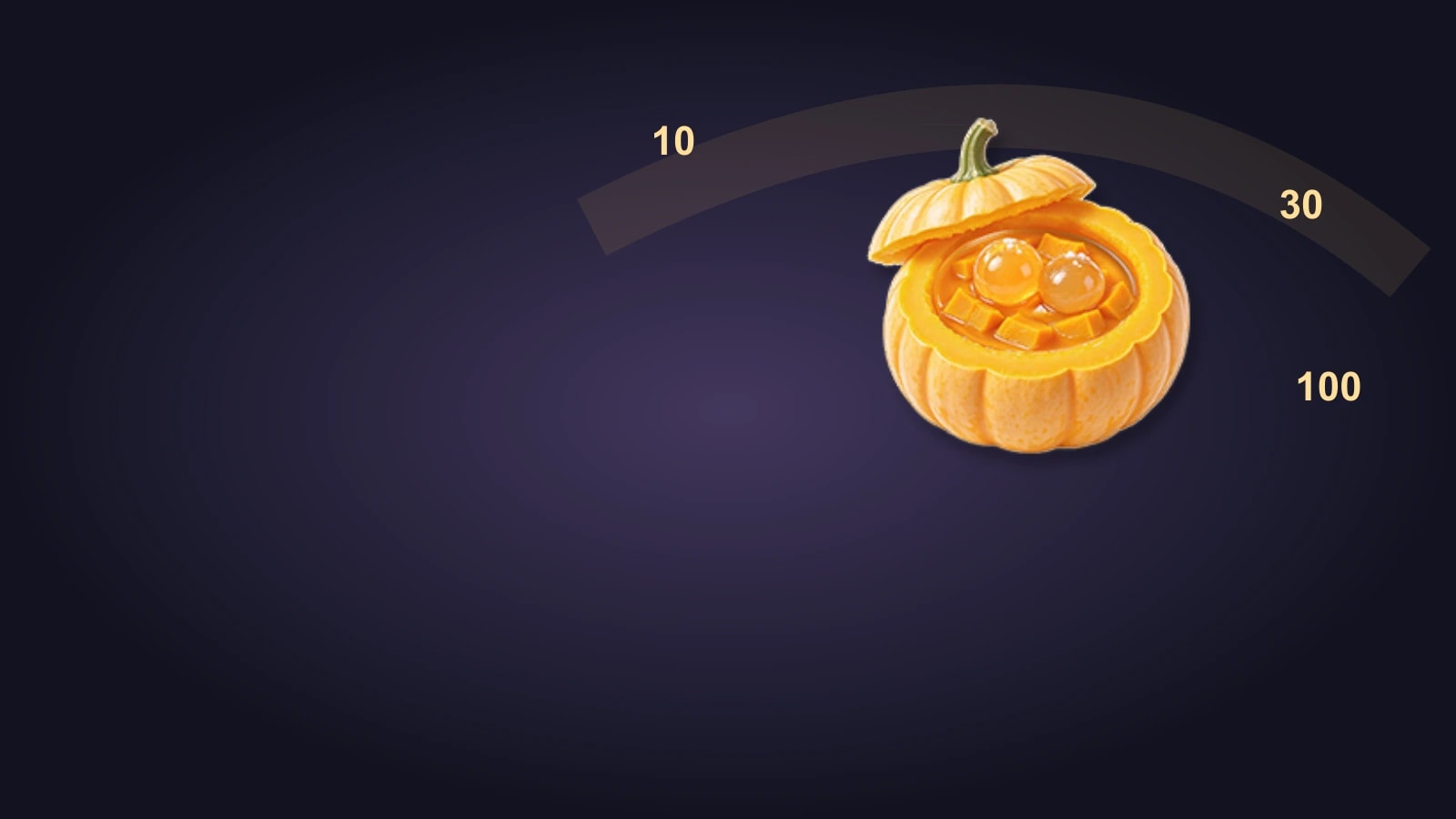
The 100-Honey-Glazed-Pumpkin-Cup request pays 8,000 Nighttime Gathering points for one acceptance. The 10-cup request pays 1,500, which is more points per cup. The biggest request is therefore better when attempts are scarce; the smaller one stretches your inventory further when you have attempts to spend.
Those are different bottlenecks. A limited stock of cups and a limited balance of request acceptances can point toward different choices, even though both choices use exactly the same product.
- Starting acceptances
- 5
- Daily addition
- 3 at 04:00
- Stored acceptance cap
- 10
- Active request limit
- 1
Ten stored acceptances is the ceiling, not the daily allowance
You begin with five request acceptances and gain three each day at 04:00, up to a stored maximum of ten. These are the game's service-clock hours, not a Pacific publication time.
The cap changes the value of waiting. If you hold nine acceptances before the daily addition, the balance can rise only to ten. It cannot become twelve. Conversely, an empty balance needs the next daily addition before three more requests can be accepted.
You can hold one active Turn-in Quest. An unfinished quest refreshes at 04:00 the following day and still uses an acceptance. Taking an order before its goods are ready can therefore spend a limited attempt without delivering the points you wanted.
The Wonder Night season guide covers the broader board and reward ladders. The choice here is what to buy with an acceptance: a large point return, a better return on inventory, or an order you can actually finish before its deadline.
One hundred cups saves attempts, but ten cups saves inventory
Here are the three request sizes for Honey-Glazed Pumpkin Cup. Each completed request uses one acceptance.
| Cups | Points per request | Points per cup |
|---|---|---|
| 10 | 1,500 | 150 |
| 30 | 3,500 | About 116.7 |
| 100 | 8,000 | 80 |
The 100-cup request delivers over five times the points of the 10-cup request for the same one acceptance. It also consumes ten times as many cups. Calling it “best efficiency” without naming the scarce resource hides that tradeoff.
For a fixed hypothetical stock of 300 cups, the contrast becomes concrete:
- Thirty 10-cup requests would pay 45,000 points and consume 30 acceptances.
- Ten 30-cup requests would pay 35,000 points and consume 10 acceptances.
- Three 100-cup requests would pay 24,000 points and consume 3 acceptances.
Those totals assume matching requests are available each time. They demonstrate the exchange rate, not a promise that the board will serve an uninterrupted run of your preferred order. If you have only three acceptances and plenty of cups, the last option converts those attempts into far more immediate progress. If production is the constraint, the small order returns more points from each finished cup.
Other seasonal goods have their own point values:
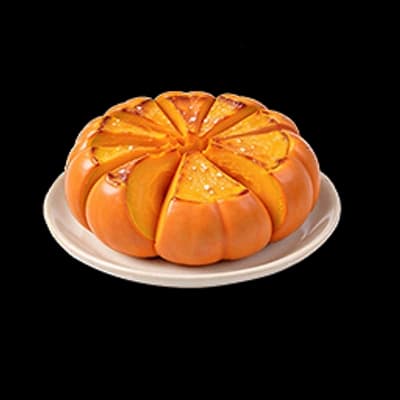


The cup request pays the most of these three equal-sized turn-ins. That does not prove it is the cheapest to produce: different goods have different inputs and production chains. The production bottleneck article explains why finished output and ingredients waiting elsewhere in your Home are different inventory positions.
From 70,000 points, Batshadow needs nineteen top cup requests
Batshadow Pumpkin sits at 220,000 Personal Cumulative Co-building Points, alongside 1,000,000 Home Coins. The appearance item unlocks the RV design; applying paint jobs opens at RV Level 21.

Consider a player whose personal cumulative total is 70,000, all from the maximum deck contribution, with no item turn-ins yet. The remaining gap is 220,000 − 70,000 = 150,000. The number changes if you already earned more cumulative points.
| Calculation | Result |
|---|---|
| 18 requests × 8,000 | 144,000 points, still 6,000 short |
| 19 requests × 8,000 | 152,000 points, target crossed |
| Cups for those 19 requests | 1,900 |
| Final cumulative total | 222,000 |
That is nineteen accepted and completed 100-cup requests, not nineteen calendar days. With zero stored acceptances, nineteen attempts require seven daily additions of three. With the initial five still banked, fourteen more attempts require five daily additions. The actual pace also depends on matching requests appearing and your ability to supply 1,900 cups.
This calculation uses the personal cumulative ladder. It does not establish eligibility for every Park giftbox, which reads the Park's total and your current contribution there. The Park-move explanation separates those counters.
Refreshing spends Home Coins, not a new acceptance
A paid refresh changes an unaccepted request. It does not grant another attempt to take one. The listed cost climbs through 10,000, 20,000, 30,000, 40,000, 50,000, 60,000, 80,000 and 90,000 Home Coins, reaching 100,000 on the ninth refresh.
The first three refreshes alone cost 60,000 Home Coins. Before spending that amount to chase a 100-cup order, compare the points you gain from using your remaining acceptances with the goods you can finish now. A board full of unusable large requests does not help a player whose finished cup stock is ten.
Paid refreshing is available only without an active request. Finish the accepted quest first, and treat the next unaccepted slot as the choice point. The best request for the session is the one that relieves your actual constraint: acceptance balance, ready inventory or the remaining point gap.