

Plan profit around your RV level
Compare ordinary Wheat, Soybean and Rose by base yield, seed cost and Home Coin sale price. Their seed offers require RV 1, 5 and 7 respectively; those milestones do not rank the crops by profit. Calibrate the base timers to your full production cycle and check each formula’s growing conditions before rebuilding your Home.
AniimoVerse · Home economy lab
Make every plot count.
Plan your next harvest, then decide what is worth processing.
RV levels below reflect the seed shop's requirements. Check the formula, facility and growing conditions before allocating plots. These candidates are not ranked by profit.
Check Wheat ingredients, conditions and worker stages
- Seed + session costs
- 0
- Sell raw
- 600
Raw sales keep the chain simple. Open the processing comparison to check whether a workshop earns its space.
Optimize a full facility layout →Calibrate to your Home
Start with ordinary crop yields, base growth timers, seed costs and Home Coin sale prices. Replace the base timer with your full sow-to-harvest cycle, including watering and worker delays. Check growing conditions, especially Rose's temperature requirement. High-price orders, random yields and Quick formulas are not applied. Plot count is your choice, not an RV capacity claim.
Raw sale or processing?
The selected recipe uses 50 Wheat for one Wheatmeal, with a base sale price of 70 Home Coins. Its workload is 54; that number is not a timer. Check the processing recipe. Five minutes is an illustrative batch duration; replace it with your measured time. Compare recipes producing one finished item per batch, and include extra ingredients in the per-batch cost. Selecting a crop resets the processing inputs.
Whole harvests and completed batches only. Starts with no stock and no mutation bonus. Reserved goods are kept; remaining raw goods are sold. Orders, build costs, food and power count only if you enter their costs. This is a scenario, not a promise of launch income.
Unlock your Homeland

- 1Accept Home Invitation at Level 20
Open the Homeland objective and meet Fannie. She hands over the basic RV that carries your Home between RV Parks.
- 2Acquire and tour the RV
Choose the starting RV appearance, then follow Fannie and take the cabin tour. This establishes the RV as the entrance and upgrade hub for the whole system.
- 3Restore power with Emberpup
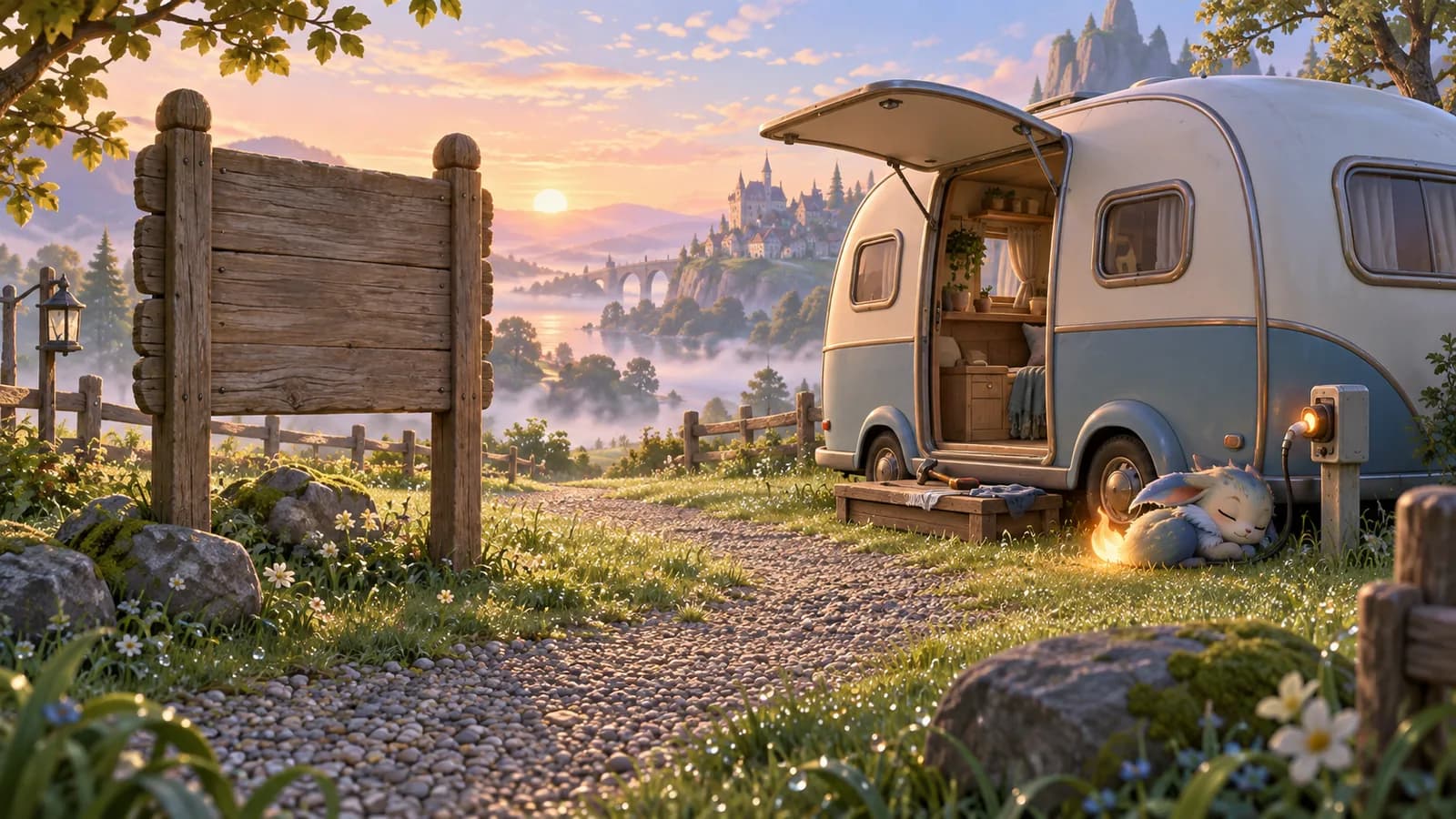
The RV door loses power during the tour. Own an Emberpup as the objective requests; its heat lets Fannie repair the motor and continue the setup.
- 4Register at the Park Board
Follow the Park Board objective to finish the parking setup. Once the RV is registered, use the portal at its rear to enter your Home.
- 5Build your Home
Follow the construction prompt and place the supplied Farmland, then use the supplied seed in the crop tutorial. That opens the first complete planting loop below.
Plant and harvest the first Wheat plot
The tutorial uses Wheat Seed to teach one full manual crop cycle. Seeds bought from the Home Shop go straight into the Homeland Warehouse, so check that stock before opening the plot settings.
- 1Place Farmland
Open Build, select Farmland and place the plot. If you do not own one yet, the interface offers a Quick Buy before placement.
- 2Check the Warehouse
Open the Homeland Warehouse and confirm that Wheat Seed is available. Production draws seeds and other raw materials from this shared stock.
- 3Choose the Wheat formula
Open the Farmland settings, select the Wheat recipe, choose Wheat Seeds and sow. The selected formula becomes the plot's active production job.
- 4Wait, then harvest
Let the Wheat mature, harvest it and pick up the output. These are base timers before watering and worker adjustments, not full production-cycle durations. Compare the ingredients and production stages in the Wheat formula catalog.
The base formula turns4 minute timer 1 Wheat Seed
 5 Wheat
 Its Quick Formula, unlocked by Ecological Module Lv. 1, turns20 minute timer1 Wheat Seed42 WheatPremium Wheat turns1 seed40 minutes15 Premium Wheat
 - 5Sell now or fill an order
Sell the Wheat immediately at the Home Co-op Store for Home Coins, or keep it for Homeland Daily Orders, which exchange requested goods for their listed rewards.

What unlocks at RV Lv. 2
Upgrade the RV to Level 2 after the first manual loop. It asks for 140 Home Coins, 3 Wood Blocks, four placed Farmland plots and the quest The Wondrous RV, then takes one minute. That opens basic Aniimo production automation and purchase access to the next Home plot. The level-up screen also raises Home capacity to 8 Aniimo, unlocks the Storage Unit, the Kitchen Module and its Aniimo Feeding, lifts the functional-facility and Daily Order limits, and adds shop stock. Work out what to build with it in the Homeland priorities guide.


Earth
Reclaim land for production

Grass
Plant seeds

Water
Water crops

Dark
Harvest crops

Hauling
Move capped facility output into Home storage
That is a Home-wide exit warning, so one Wheat plot does not need all five abilities. Select the plot and follow its displayed Ability Distribution for the active formula. Earth handles reclamation; Hauling works through Storage after output reaches a facility’s cap. The Homeland staffing guide covers form-level workers.
How the Homeland works
Under the soft edges it is a production sim, and it runs on four steps that repeat for as long as you play.
- 1Unlock your plots
Your Home is a set of land plots you unlock and lay out over time, spreading across several zones as your RV level rises.
- 2Place facilities
Drop in farm plots, logging spots, kitchens and material producers. Levelled facilities unlock more formulas, while specialist plots have a fixed function and matching operator.
- 3Staff them with Aniimo
Cover the requirements in Ability Distribution. A creature’s element role and work ability decide which production stages it can run.
- 4Keep crop production moving
Plants keep growing and can be harvested after you log off, and an official patch note covers correcting resources from plants harvested offline. Processors and cooking timers are a separate case, so queue those with a duration that fits your absence. Keep the Home food supply stocked so worker efficiency stays high.
RV levels, customization and components
The Home travels with your RV, which parks beside other Pathfinders in one of four RV Parks. Each park holds six RVs, your pitch expands to 25 plots, and Home Coin pays for land and production upgrades.
| RV Park | Setting | Pitches |
|---|---|---|
| RV Park: Sea of Flowers | Between the Sea of Flowers and a pine forest | 6 |
| RV Park: Nimbus Fields | Between Nimbus Fields and Mistwoods | 6 |
| RV Park: Echoback Landing | An island beach in Echoback Landing | 6 |
| RV Park: Driftwise Meadow | A lakeside pitch in Driftwise Meadow | 6 |
Twenty RV levels run from the gift RV to a 45-place Home. The cost curve is steep at the top: RV 2 is 140 Home Coins and one minute, RV 20 is 20,800,000 Home Coins and twelve hours. Three things gate the climb, and the third one catches people out.
| RV level | Aniimo places | Gate beyond materials | What it opens |
|---|---|---|---|
| RV 1 | None yet | Fannie hands it over | Rest Module, +3% Stamina |
| RV 2 | 8 | 4 Farmland · The Wondrous RV quest | Workers, Storage Unit, Kitchen Module, more orders |
| RV 3 | 11 | 6 Farmland · 3 Woodland | Ecological Module on sale, Rest Module Lv 2 |
| RV 4 | 14 | 8 Farmland · 4 Woodland | Order refreshing, Kitchen Module Lv 2 |
| RV 5 | 17 | 10 Farmland · 5 Woodland | Resource Detector and Crafting Module on sale |
| RV 6 | 20 | 12 Farmland · 6 Woodland | Signal Transmitter and Dispatch, Plant Research on sale |
| RV 7 | 22 | Student III title · 14 Farmland | Ecological and Crafting Module Lv 2 |
| RV 8 | 24 | 16 Farmland · 8 Woodland | Homebuilding Zone, where Aniimo make Bud Tickets |
| RV 9 | 26 | 18 Farmland · 9 Woodland | Incubation Reaction Module, more orders |
| RV 10 | 28 | 13,000 Habitability | Home Season event, Kitchen Module Lv 4 |
| RV 11 | 30 | Wayfarer I title · 13,500 Habitability | Signal Transmitter Lv 2, second Dispatch place |
| RV 12 | 32 | 14,000 Habitability | Power Module, generators and power poles, more orders |
| RV 13 | 34 | 14,500 Habitability | Resource Detector Lv 4, Kitchen Module Lv 5 |
| RV 14 | 36 | 15,000 Habitability | Power Module Lv 2, Ecological Module Lv 6 |
| RV 15 | 38 | Wayfarer II title · 15,500 Habitability | Plant Research Lv 4, more orders |
| RV 16 | 40 | 16,000 Habitability | Signal Transmitter Lv 3, third Dispatch place |
| RV 17 | 42 | 17,000 Habitability | Crafting Module Lv 5, Ecological Module Lv 8 |
| RV 18 | 43 | 18,000 Habitability | Power Module Lv 4, more orders |
| RV 19 | 44 | Wayfarer III title · 19,000 Habitability | Crafting, Kitchen and Resource Detector top ranks |
| RV 20 | 45 | 20,000 Habitability | Power Module Lv 5, Crackle Generator Lv 5 |

- Visible milestones: the RV changes shape at Levels 2, 4 and 5 as the body expands and the rooftop opens.
- Customization: rename the RV, change its body color and swap the rooftop ornament from the RV Customization menu.
- Reward track: RV levels also award cosmetics, Glimmer, Aniipods, clothes and eggs.
- Two currencies, two jobs: Home Coin buys land, facilities and RV levels, while Bud Tickets buy decorative furniture and come from Aniimo placed in the Homebuilding Zone at RV 8.
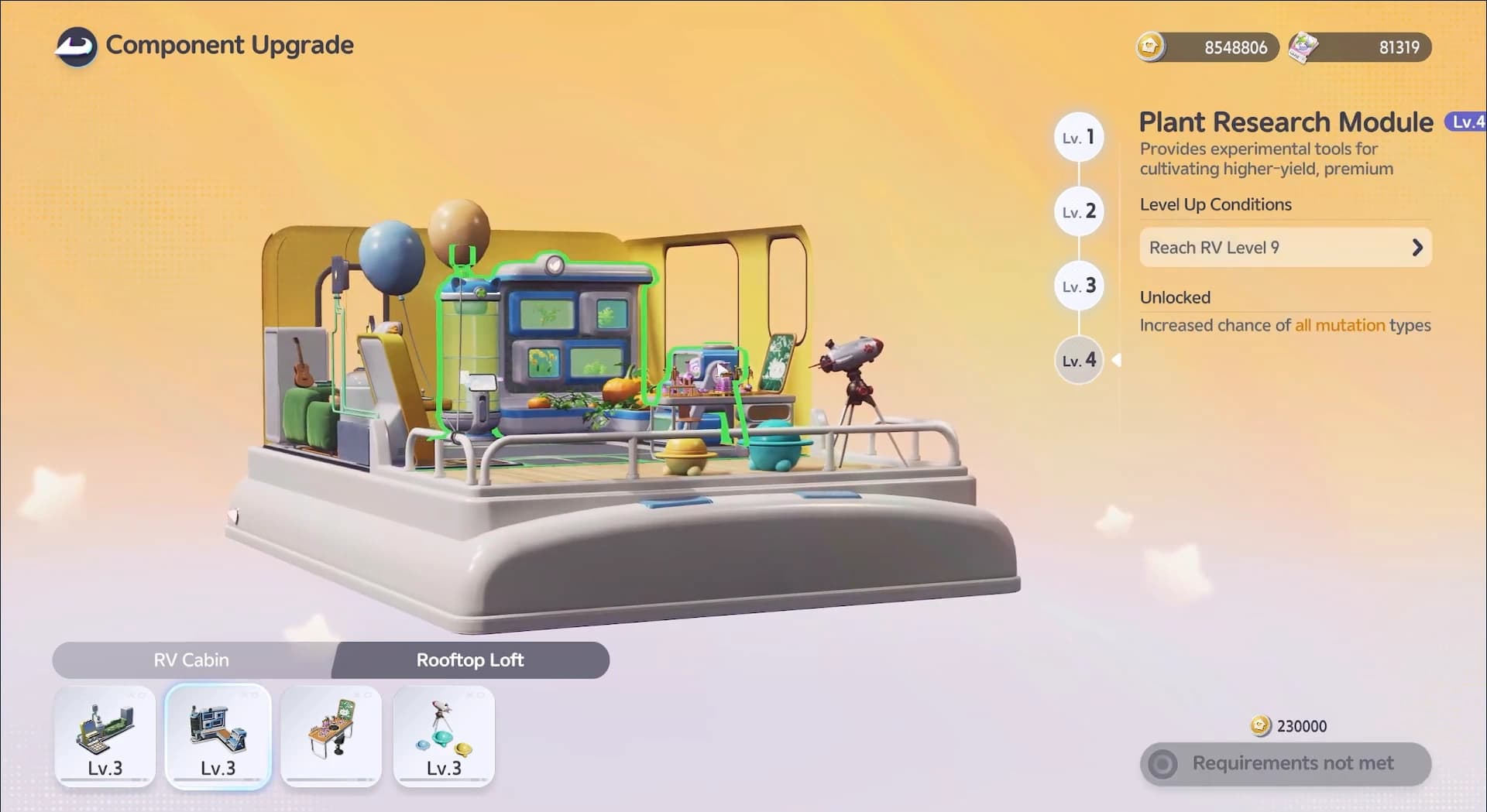
Components are the functional RV unlocks. Five fit inside the cabin and four occupy the rooftop loft; each component’s next rank is gated by RV level.
RV Cabin
Raises max Stamina by 3%, then 6% at RV 3 and 10% at RV 5.
Adds a Quick Formula to Farmland or Woodland at every rank, starting with Quick Formula: Wheat.
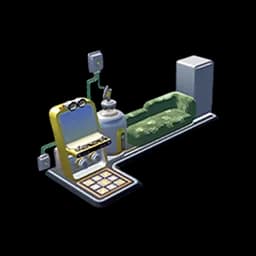
Unlocks Aniimo Feeding, then a Premium recipe on the Claw Game Cooker, Blazing Stove or Pickling Jar at each rank.
Adds Quick Recipes to the Well, Tidewhisper Sandcastle, Dewy House, Nimbus Bed and Floral Windmill.
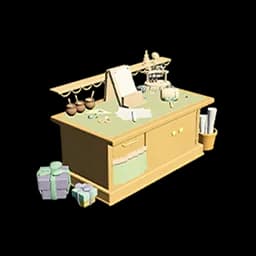
Unlocks Premium recipes on the Crafting Table and Phonolfactory Table, from River-Washed Stones up to Mixed Perfume.

Rooftop Loft
Unlocks the Crackle Generator and Crackle Power Pole, then a higher generator rank and a larger pole limit at each RV milestone to 20.
Adds the Colorful mutation, then Shining at RV 9, Crystalline at RV 12, and a higher chance on every type at RV 15.
Raises Homeland Hatchinator efficiency, so eggs parked at Home finish sooner.
Opens Aniimo Dispatch with one RV Park place, a second at RV 11 with Dispatch · Adventure, and a third at RV 16 with Dispatch · Camping. Dispatches have a chance to return an egg with the Prismana trait; see the Prismana guide and eggs guide.



Work abilities: who does which job
Each of the 210 worker forms has at least one elemental Home specialisation, and many also carry one of four general Home abilities. These abilities determine what a worker can produce or move. A hammer badge on its portrait means it is actively working, and duplicate Aniimo can share the same Home.
Species-only rosters are misleading because forms can change their jobs. Use the form-level Homeland staffing guide for the complete profile counts, ability ceilings and strongest workers.
Hauling
- 85
- form profiles
Hauling Aniimo pick up stockpiled produce from facilities and carry it to Home storage.

Artisanship
- 45
- form profiles
Crafty Aniimo make furniture, appearance items and other goods for your Home.

Leisure
- 54
- form profiles
Playful Aniimo produce items while they play.

Perfumery
- 2
- form profiles
The perfume-bench specialty: Fragrancier reaches Lv 3 and Dewy supplies Lv 1.

Ability Distribution and workload
Placing a facility is half the job; staffing it is the other half. Work speed depends on both the operation and the Aniimo’s ability level. Ability Distribution totals assigned elements and work abilities so you can spot missing jobs before choosing faster workers.
- Lv 160 Workload per minute
- Lv 290 Workload per minute
- Lv 3120 Workload per minute
- Lv 4150 Workload per minute
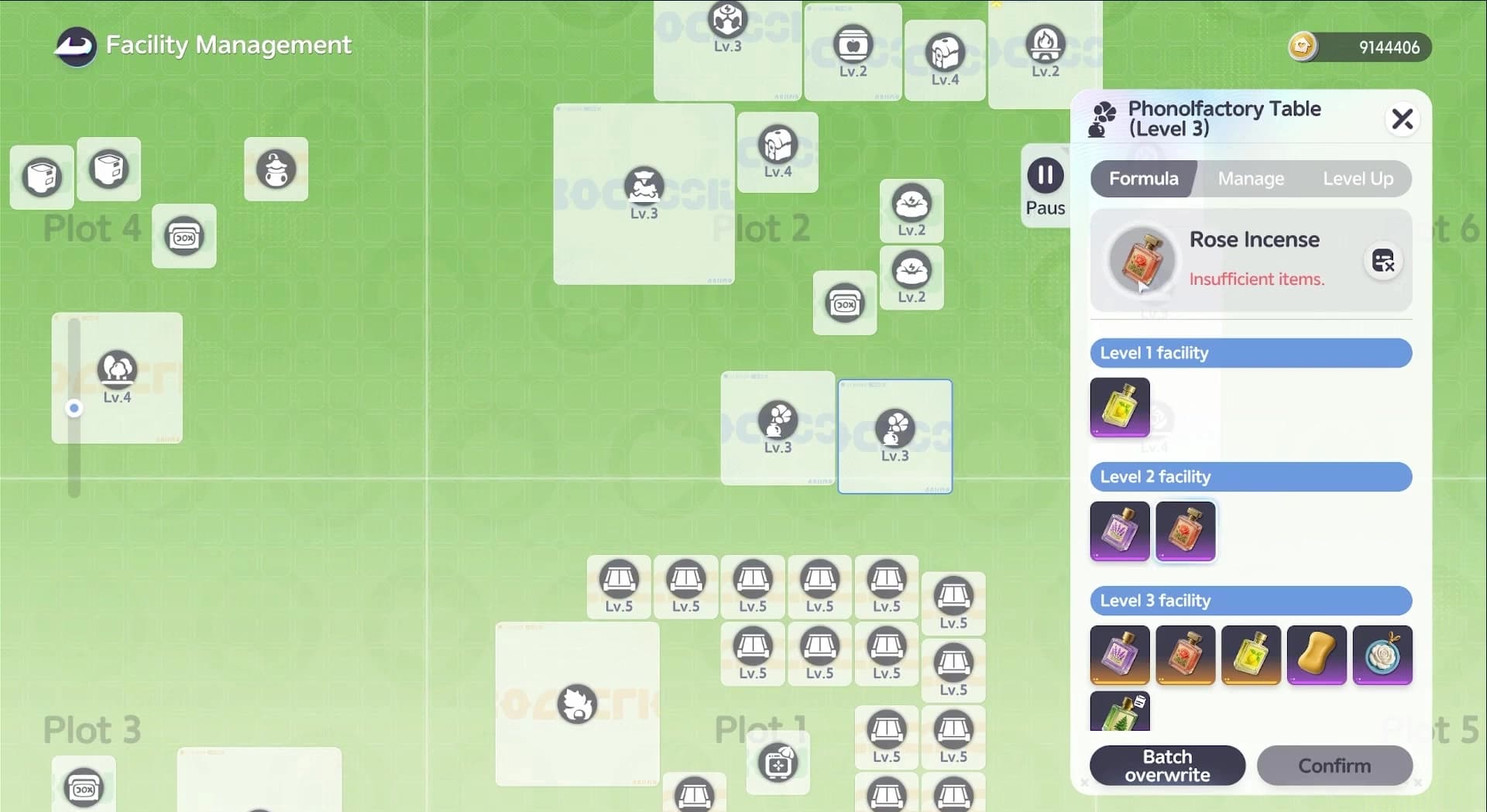
For this planting operation, a Lv. 4 worker contributes 150 Workload per minute against 60 at Lv. 1. Other operations use different rates. The current work-stage countdown is remaining Workload divided by the workers’ combined rate, multiplied by 60 seconds; growth timers, preparation and hauling also affect the full cycle. Open Formula to choose the output, Manage to inspect its workers and Level Up to expand the recipe list.
Element roles
Each of the nine Aniimo element types carries its own Homeland specialisation, which is the second filter on who can staff what.

Fire
- 33
- form profiles
Cooking and supplying heat

Grass
- 50
- form profiles
Planting seeds and gathering resources

Water
- 34
- form profiles
Brewing and watering plants

Earth
- 31
- form profiles
Reclaiming land and mining resources

Lightning
- 23
- form profiles
Manipulating electricity

Ice
- 24
- form profiles
Cooling your Homeland environment

Wind
- 40
- form profiles
Controlling the wind to process products

Dark
- 40
- form profiles
Harvesting crops, cutting plants and drying items

Light
- 11
- form profiles
Illuminating your Homeland
What you can grow
Facility formulas cover 30 growables: 17 crops from Farmland and 13 plants from Woodland. Three of the Farmland entries are seasonal, arriving with the Harvest Moon Festival rather than the base shop, and Woodland also returns Wood Blocks as a by-product.
Farmland
17 entries17 crops, three of them seasonal
Wheat

Cotton

Potato

Rice

Sugarcane

Soybean

Strawberry

Agave

Lavender

Rose

Ginseng

Grapes

Cranberry
Premium Wheat
Premium formula
Moondew Radish
Harvest Moon
Waxing Moon Pepper
Harvest Moon
Captain Spud
Seasonal
Woodland
13 entries13 plants, plus Wood Blocks
Willow Wood

Bamboo

Chestnut

Lemon

Coconut

Maple Syrup

Palm Bark

Natural Rubber

Walnut

Cherry Blossom

Apple

Cocoa

Orange Flower
Temperature and light gate 21 formulas
Most recipes only need workers and ingredients. Twenty-one do not: 16 formulas name a temperature band and 5 name a light level, and a plot outside the band stalls with The temperature is not suitable. Temperature comes from an auxiliary unit in range, not from the weather outside, and you set the target you want on the unit’s Details panel.
| Requirement | Unit to place | Growables that need it |
|---|---|---|
 High temperature High temperature | Heat Furnace | Sugarcane · Cocoa · Agave · Natural Rubber · Palm Bark · Coconut |
| Warm temperature | Heat Furnace, set lower | Cherry Blossom · Chestnut · Pearl |
 Cool temperature Cool temperature | Cooling Unit | Strawberry · Rose · Ginseng · Apple · Star |
| Cold temperature | Cooling Unit, set lower | Cranberry · Maple Syrup |
 Artificial light Artificial light | Sunlamp | Lavender · Grapes · Orange Flower · Walnut · Scales |























Five more formulas need a specific species rather than a temperature: Scales from a Flutternym, Wool from a Nimbi, Petals from an Iris, Aromathyst from a Dewy, Star from a Celestis, and Pearl and Sea Salt from a Shelly and a Susuta. Those are the leisure beds and hammocks rather than the crop plots.




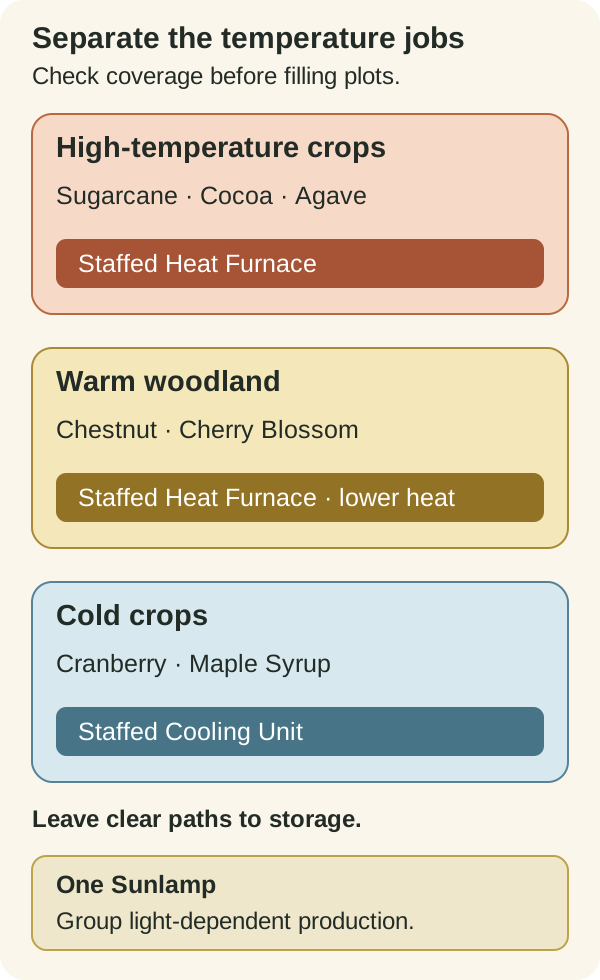
Keep several temperature zones in one Home
Build separate production zones before trying to tune overlapping heat and cooling. Put each temperature unit beside the plots it serves, leave a clear hauling path, and keep storage close to processing. A layout is useful when its crops finish and its workers can move, not when every square is filled.
- 1Place and staff the unit first
Set its target in Details and give it the required worker. An unstaffed auxiliary unit is not a reliable growing condition.
- 2Check a plot at the near edge and far edge
Select the recipe and confirm its temperature and light conditions at both positions. Move the unit or plot before planting an entire block.
- 3Leave a path through the layout
Keep hauling access to storage, ingredient supply and finished output. Match the staffing plan to the buildings you actually run.
- 4Observe a complete production cycle
Confirm planting, watering, harvesting and hauling all finish before copying the arrangement across the Home. Expand the successful block and check the new outer plots again.
Use the Homeland production calculator to compare unlocked facilities and workers, and the staffing guide to solve the slowest task. Do not choose a profitable crop projection until its growing conditions fit the space you can operate.
Facilities and what they make
The build menu divides 29 functional facility families into five groups: Materials Production, Materials Processing, Item Production, Auxiliary Facilities and Aniimo Facilities. The catalogue below lists every one with its level range, the Homeland ability it needs and what it makes. Materials Processing is the largest group at twelve families, and the food chain alone runs across the Blazing Stove, Claw Game Cooker, Simmering Pot and Pickling Jar.
Enter your owned buildings, facility levels and unlocked modules in the Aniimo Homeland production calculator to model supported Home Coin production chains. The calculator labels estimated values and exclusions where its data is incomplete.
Materials Production
9 entries9 families · raw crops, wood, ore, water and Aniimo materials.webp&w=64&q=75)
Farmland
Levels 1–7Grass · Water · Dark · Earth
.webp&w=64&q=75)
Woodland
Levels 1–6Grass · Water · Dark · Earth
Willow Wood, Bamboo, Chestnut, Lemon, Coconut, Maple Syrup, Palm Bark, Natural Rubber, Walnut, Cherry Blossom, Apple, Cocoa, Orange Flower and Wood Blocks
Open Woodland.webp&w=64&q=75)
Mine
Levels 1–6Earth
Rock, Clay, Shell, Copper Ore, Quartz Ore, Gem and Mineral Sand
Open MineWell
Levels 1–5Water
Well Water, Plain Fresh Water, Deep Rock Spring Water and Natural Mineral Spring, the water inputs the drink and jam chains draw on
Open Well
Nimbus Bed
Levels 1–3Leisure
Wool with a Nimbi, Petals with an Iris
Open Nimbus Bed
Tidewhisper Sandcastle
Levels 1–3Leisure
Pearl with a Shelly, Sea Salt with a Susuta
Open Tidewhisper Sandcastle
Dewy House
Levels 1–2Leisure
Aromathyst, produced by Dewies
Open Dewy House
Starfall Hammock
SingleLeisure
Star with a Celestis
Open Starfall Hammock
Floral Windmill
SingleLeisure
Scales with a Flutternym
Open Floral Windmill














Materials Processing
12 entries12 families · the whole cooking, brewing, drying, milling and crafting chain.webp&w=64&q=75)
Crafting Table
Levels 1–8Artisanship
Wood Sculpture, Harvest Platter, Bamboo Ware, River-Washed Stones, Rose Freshener, Pottery, Bouquet, Shell Ornament, Lavender Sachet, Wind Chime, Star Wish Lantern, Dream Catcher, Rubber Duck, Pearl Necklace, Woven Toy, Porcelain, Dye, Gemstone Dust, Flowers in a Bottle and Doll
Open Crafting TableBlazing Stove
Levels 1–5Fire
Cherry Blossom Rice Ball, Creamy Potato Soup, Soy Sauce Fried Rice, Umbral Hot Pot, Soy Sauce Tofu, Sugar-Roasted Chestnuts, Tanghulu, Walnut Cake, Ginseng Chestnut Cake, Steamed Vermicelli Roll, Jello, Rich Grape Compote, Strawberry Candy, Strawberry Cream Puff and Cranberry Chocolate
Open Blazing Stove
Claw Game Cooker
Levels 1–7Fire
Bread, Roasted Waxing Moon Pepper, Roasted Soybeans, Maple Candy Roasted Potatoes, Apple Tart, Rose Shortbread, Lavender Cookies, Apple Candy, Grape Candy, Caramel Nut Chips, Maple Candy Star, Coconut Cookie, Flower Bread and Berry Chocolate Coconut Pudding
Open Claw Game CookerSimmering Pot
Levels 1–6Fire
Plain Rice Porridge, Umbral Sweet Spicy Sauce, Rose Concentrate, Rock Candy, Strawberry Jam, Maple Candy Apple Jam, Chestnut Purée, Grape Jam, Ginseng Porridge, Maple Sugar Chunk, Malt Sugar, Cocoa Spread, Cranberry Jam and Agave Syrup
Open Simmering PotChimney Kiln
Levels 1–4Fire
Coarse-Sifted Ore, Sintered Ore Brick, Refined Ore and Microcrystalline Ore Plate, the ore side of every RV upgrade above Level 7
Open Chimney Kiln.webp&w=64&q=75)
Bouncy Brew Keg
Levels 1–5Water
Toasted Rice Green Tea, Wheat Tea, Strawberry Juice, Sugarcane Juice, Apple Juice, Potato Kvass, Grape Juice, Ginseng Water, Grape Lemon Drink, Walnut Milk, Cranberry Juice, Coconut Cooler, Coconut Cocoa, Hot Cocoa, Orange Flower Dew and Agave Drink
Open Bouncy Brew KegPickling Jar
Levels 1–5Dark
Salted Cherry Blossom, Soy Sauce, Umbral Pickle, Sweet Rice Drink, Cider Vinegar, Sweet Rice Wine, Rice Vinegar, Salted Lemon, Candied Strawberries and Candied Orange Flower
Open Pickling Jar
Jukebox Dryer
Levels 1–7Dark
Potato Chips, Dried Lemon Slices, Dried Cherry Blossom, Dried Bean Curd, Dried Apple Slices, Dried Strawberries, Nuts, Dried Ginseng, Dried Grapes, Shredded Coconut, Dried Cranberries and Dried Flowers
Open Jukebox Dryer.webp&w=64&q=75)
Carousel Mill
Levels 1–6Wind
Wheatmeal, Tofu, Milled Rice, Lavender Powder, Rice Drink, Ginseng Powder, Refined Flour, Coconut Oil, Cocoa Powder and Coconut Milk
Open Carousel Mill
Joy Wheel Loom
Levels 1–4Wind
Cotton Thread, Woolen Yarn, Cotton Fabric, Wool Fabric, Palm Rope and Dyed Cotton Fabric
Open Joy Wheel Loom.webp&w=64&q=75)
Phonolfactory Table
Levels 1–6Perfumery
Bamboo Joss Stick, Rose Incense, Cherry Incense, Lavender Incense, Lemon Incense, Herbal Ginseng Aroma, Soap, Mixed Perfume, Orange Flower Incense and Lotion
Open Phonolfactory TableWoodworking Bench
Levels 1–4Artisanship
Rough Lumber, Standard Planks, Laminated Beams and Densified Timber Component, the timber side of every RV upgrade above Level 7
Open Woodworking Bench
























Item Production
2 entries2 families · catch and growth consumables.webp&w=64&q=75)
Aniipod Maker
Levels 1–3Lightning

Dance Pad Polisher
Levels 1–3Lightning






Auxiliary Facilities
5 entries5 families · they hold no formula of their own and serve everything in range
Storage Unit
SingleHauling
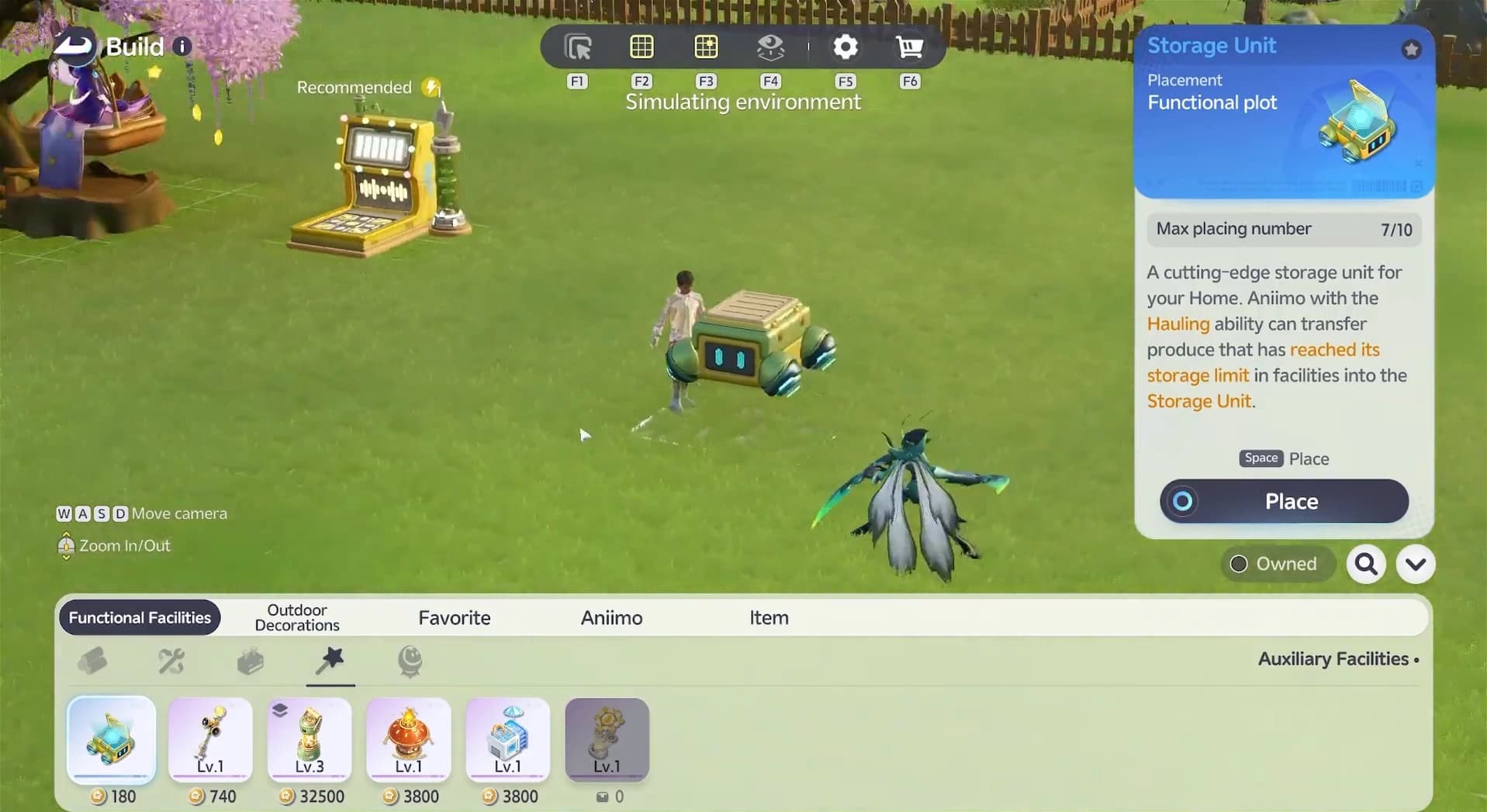
Lets Hauling Aniimo move fully stacked facility output into Home storage
Open Storage Unit
Heat Furnace
SingleFire
Raises the temperature for the 9 formulas that need heat. Set the target on its Details panel
Open Heat Furnace
Cooling Unit
SingleIce
Lowers the temperature for the 7 formulas that need cold. Set the target on its Details panel
Open Cooling Unit
Sunlamp
SingleLight
Provides the artificial sunlight 5 formulas need, Lavender and Grapes among them
Open Sunlamp.webp&w=64&q=75)
Crackle Generator and Power Pole
Levels 1–5Lightning
Supplies electricity to nearby machines. Several generators and poles form one grid, and connected facilities share its total power
Open Crackle Generator and Power Pole
Aniimo Facilities
1 entry1 family · incubation at Home
Hatchinator
Single
Incubates eggs inside the Homeland, faster once the Incubation Reaction Module is fitted at RV 9
Open Hatchinator
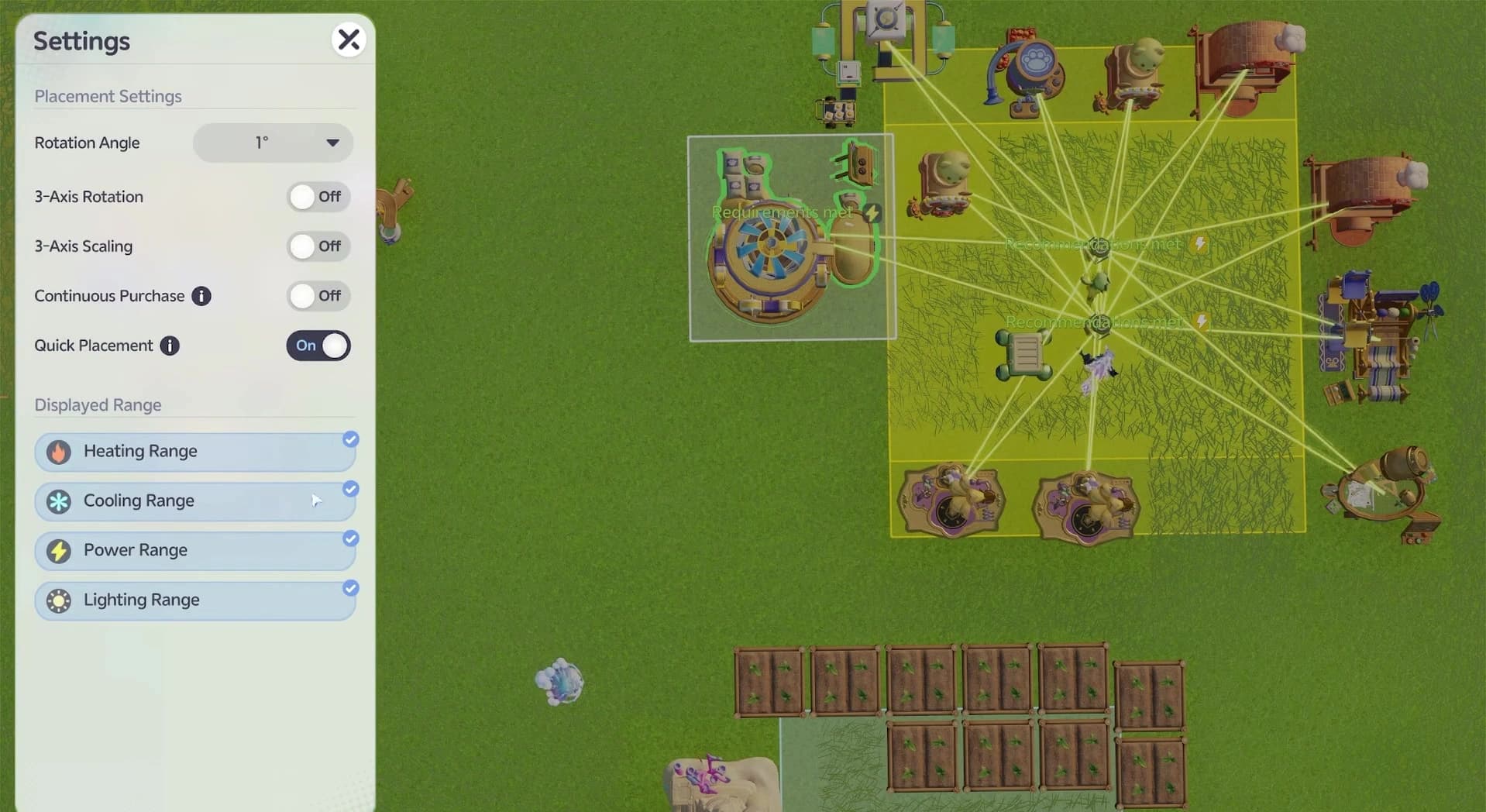
Placement is part of production design. Storage Units need Hauling coverage, while the Heat Furnace, Cooling Unit, Sunlamp and generators serve only machines inside their displayed ranges. Open Build Settings to show heating, cooling, power and lighting overlays before locking the layout.
Food and energy
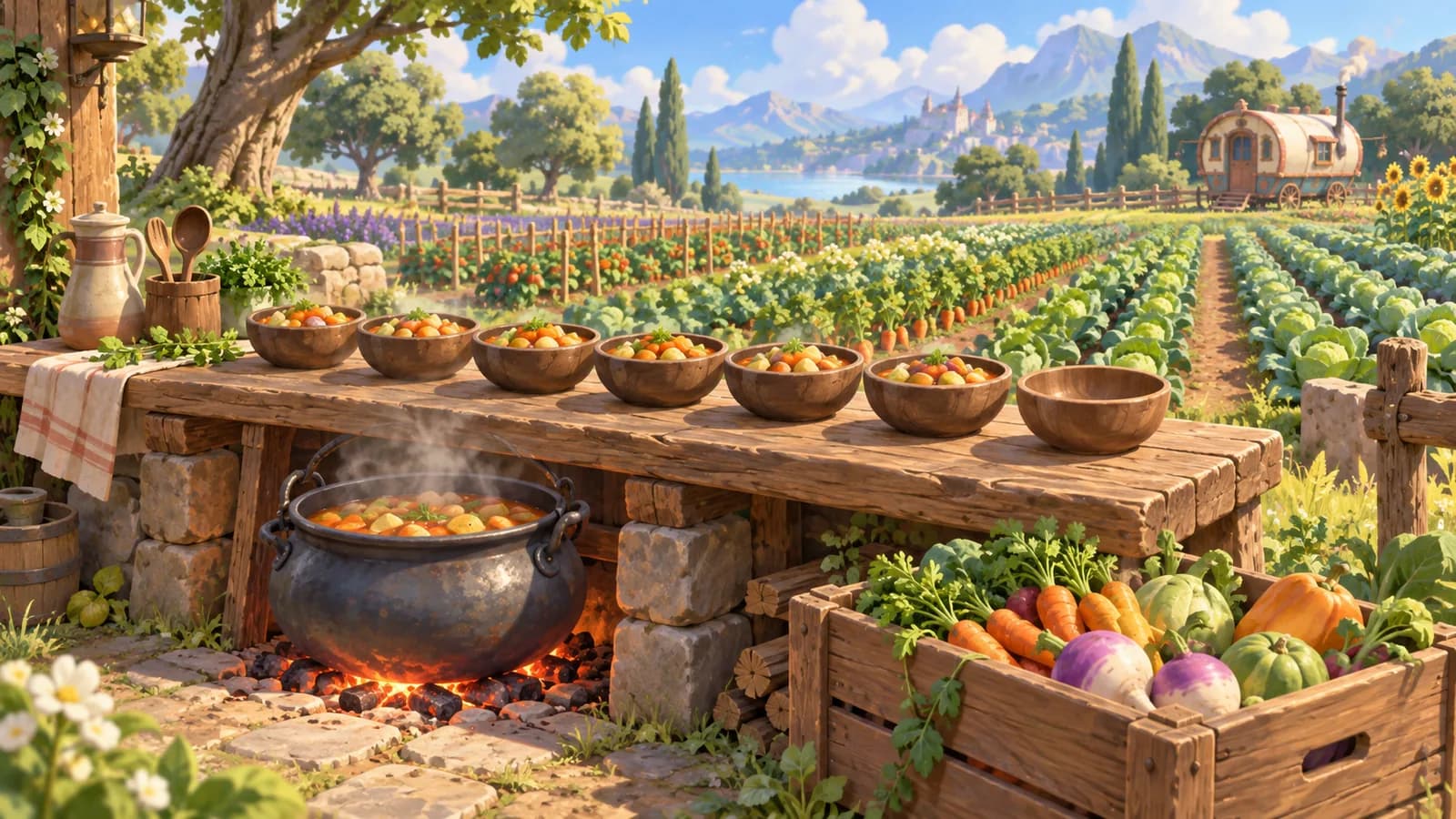
Cooking links the farm to its workforce. Crops become dishes, and the Food tab converts those dishes into a visible supply timer for assigned Aniimo. If the bowl runs empty, worker efficiency falls; keep it stocked while production jobs are active.
| Dish | Cooked on | Food added |
|---|---|---|
| Premium Bread | Claw Game Cooker | 26,740 |
| Premium Potato Soup | Blazing Stove | 23,470 |
| Premium Jello | Blazing Stove Lv. 4 | 47,440 |
| Premium Berry Chocolate Coconut Pudding | Claw Game Cooker Lv. 7 | 142,560 |




Since version 1.1 the four Premium dishes feed workers 3 to 3.8 times longer than before. Premium Berry Chocolate Coconut Pudding adds 142,560, the most of any food in the game and 1.13 times the standard pudding. Premium Bread and Premium Potato Soup now match regular Bread and Creamy Potato Soup, and Premium Jello beats regular Jello (42,690) by 1.11 times.
Decorations and editor tools
Decorative furniture is bought with Bud Tickets, and the browser splits into three families: Outdoor Decorations for the grounds, Indoor Decorations for the rooms, and Home Decorations for the structure of the house itself. Habitability, the score that gates every RV level from 10 upward, comes from what you place here rather than from production.
| Family | Category | What it covers |
|---|---|---|
| Outdoor | Ground level | Paths, turf, paving and ground surfaces |
| Outdoor | Fences | Stone walls, rope barriers, rails, gates and fence pieces |
| Outdoor | Plants | Trees and large planted scenery |
| Outdoor | Plant (Small) | Flowers, shrubs and compact greenery |
| Outdoor | Decorations | Large ornaments, statues, ponds, arches and display pieces |
| Outdoor | Small Decor | Books, signs, carts, food props and tabletop-scale ornaments |
| Outdoor | Gardening Views | Logs, rocks, hedges, topiary and arranged garden scenery |
| Outdoor | Building Blocks | Modular structural pieces for custom builds |
| Outdoor | Tables and Chairs | Outdoor dining, lounge and seating furniture |
| Outdoor | Interactive Furniture | Usable leisure furniture and activity props |
| Outdoor | Lamps | Standing, hanging and decorative lighting |
| Indoor | Soft Furnishing Fabrics | Rugs, throws and fabric dressing, the largest indoor shelf |
| Indoor | Tables and Chairs · Cabinets · Beds | The core room furniture sets |
| Indoor | Bathroom · Kitchenware · Home Appliances | Working fittings for each room type |
| Indoor | Greenery · Interior Ornament · Decor | Indoor planting and shelf dressing |
| Indoor | Lighting · Curtains · Partition | Light, windows and room dividers |
| Indoor | Aniimo Furniture | Pieces your Aniimo use rather than you |
| Home | Wall · Floor · Rooftop | The house shell, and the largest category in the game at 115 wall pieces |
| Home | Window · Door · Stairs · Pillar · Fence | Structural openings and supports for a custom build |
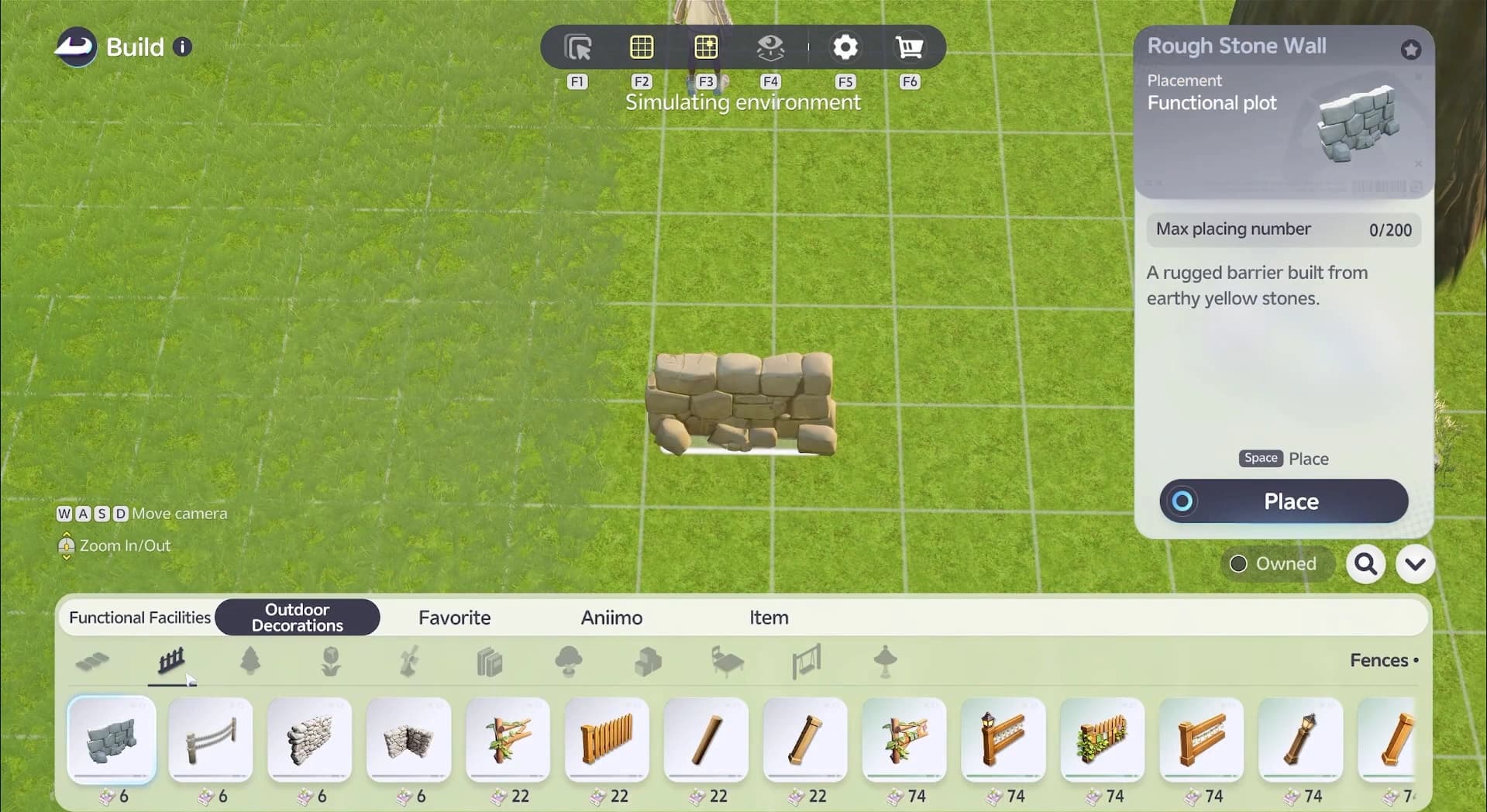
The build drawer also has Favorite, Aniimo and Item tabs. Pull a harvested crop from Item to use it as scenery; mutated crops keep their distinct visual treatment, so production can supply the decorative farm as well as the Order Robot.
| Control | What it does |
|---|---|
| Multi-select | Moves a group of facilities, crops or decorations in one edit. |
| Grid | Shows the plot grid for measured spacing. |
| Grid snapping | Locks movement to grid cells. |
| Bird’s-eye view | Fixes the camera on a flat overhead layout. |
| Rotation and scaling | Uses 1, 15, 45 or 90-degree rotation steps, plus three-axis rotation and scaling. |
| Continuous Purchase | Buys the next copy after placement, with a confirmation before spending. |
| Displayed Range | Toggles heating, cooling, power and lighting coverage. |
- Shareable furniture groups: furniture groups can be shared through codes as blueprints of up to 500 pieces, and the editor accepts larger multi-selections.
- Interactive furniture: more furniture supports interaction, and some pieces can be placed and used in the open world.
- Furniture sell-back: unused furniture can be sold back at a discount through the Home Co-op Store.
- Home season events: seasonal events offer season-exclusive furniture and formulas.
Browse furniture, formulas and worker forms
Use the Homeland database to compare furniture Habitability and placement costs, find production ingredients and base outputs, and check every RV component level. The work ability catalog lists exact forms and ability levels so you can choose a worker for the selected production stage.
Harvest Moon seasonal collections
When the Harvest Moon Festival is available, its activities open in three stages: Harvest, Preparation and Gathering. Reach RV Level 10 and finish the opening story requirements to get started; seasonal plots have an additional story gate.
Complete Harvest Dailies, plant Moondew Radish and Waxing Moon Pepper to find mutations, and collect seasonal items for Harvest Moon Points. Later stages add gathering preparations and the gathering itself. The Harvest Moon catalog lists daily rewards, all 16 crop mutations, 52 point-granting items and collection milestones.
The four Season Tiles (I to IV) cost 1,600 Bud Tickets each to unlock and arrive covered in 36 pieces of Misc. clutter. Clearing each piece pays 10 Moonray Wheat, 360 across all four tiles, and Moonray Wheat is the currency the season furniture trader takes.

Shop, storage, orders and visitors
- Warehouse: opens from anywhere inside Homeland and holds crops, seeds, materials and finished output.
- Homeland Shop: sells seeds and Aniimo food, then provides Homeland Gifts and a Resource Exchange.
- Home Co-op Store: buys most Homeland products immediately, including crops, for the currency listed on the sale screen.
- Homeland Daily Orders: BINI #2333, the Order Robot, holds delivery requests. The board tops up at 04:00 and 16:00 server time, twice a day from RV 2 onward and only at 04:00 while the RV is still Level 1. Each top-up brings more requests as the RV levels, and the board cap climbs from 5 to 17 across RV 2, 4, 6, 9, 12, 15 and 18. RV 4 is where refreshing an order unlocks at all. Submit completed goods for the listed reward, use the free refresh first, then check the displayed cost before refreshing again. Every Homeland clock, including the Monday 04:00 Gacha reset, sits in the reset timers tool.
- Worker care: an injured, sick or upset Aniimo stops work and moves aside for attention; interact with it to return it to the job.
- Visits: other Pathfinders can enter the RV Park, inspect a Home and pet an egg in its Hatchinator to accelerate incubation. Daily petting limits apply in both a friend’s Home and your own; see the egg guide for the hatching rules.
- Soil tilling: till the soil at another Pathfinder’s Home and the owner thanks you with a Home Tilling Reward. You can collect that reward 5 times from any one Home per day and 30 times a day in total, and the gift pool refreshes once a day, so spreading visits across several friends pays more than repeat trips to one. Every 15 tills at friends’ Homes also earn a Tilling Chest, and you can open 1 a day. The co-op guide covers shared Home visits.
- Home Coin is the Homeland currency for land and production upgrades.

Frequently asked
How do I unlock the Homeland in Aniimo?
Reach Level 20, accept Home Invitation, meet Fannie, tour the RV, restore its power with an owned Emberpup, register at the Park Board and enter through the portal behind the RV. The beginner guide covers the earlier route.
What unlocks at RV Level 2?
RV Level 2 introduces basic automation, raises Home capacity to 8 Aniimo, unlocks the Storage Unit plus the Kitchen Module and its Aniimo Feeding, lifts facility and Daily Order limits, adds shop stock and opens purchase access to the next Home plot. It costs 140 Home Coins and 3 Wood Blocks and needs four placed Farmland plots plus the quest The Wondrous RV. The exit warning names Earth, Grass, Water, Dark and Hauling for the Home as a whole; follow each selected formula's own Ability Distribution.
How many Aniimo can live in your Homeland?
8 at RV 2, rising with every upgrade to 45 at RV 20. Capacity is the only thing that climbs on a fixed curve: from RV 10 each level also needs a Habitability score between 13,000 and 20,000, and RV 7, 11, 15 and 19 need the Student III, Wayfarer I, Wayfarer II and Wayfarer III titles.
Do Homeland facilities keep producing while I am offline?
Plants do. They keep growing and can be harvested when you return, and an official patch note covers correcting resources from plants harvested offline. Set processor and cooking jobs to a duration that fits the time you plan to be away.
Why did an Aniimo disappear from my combat roster?
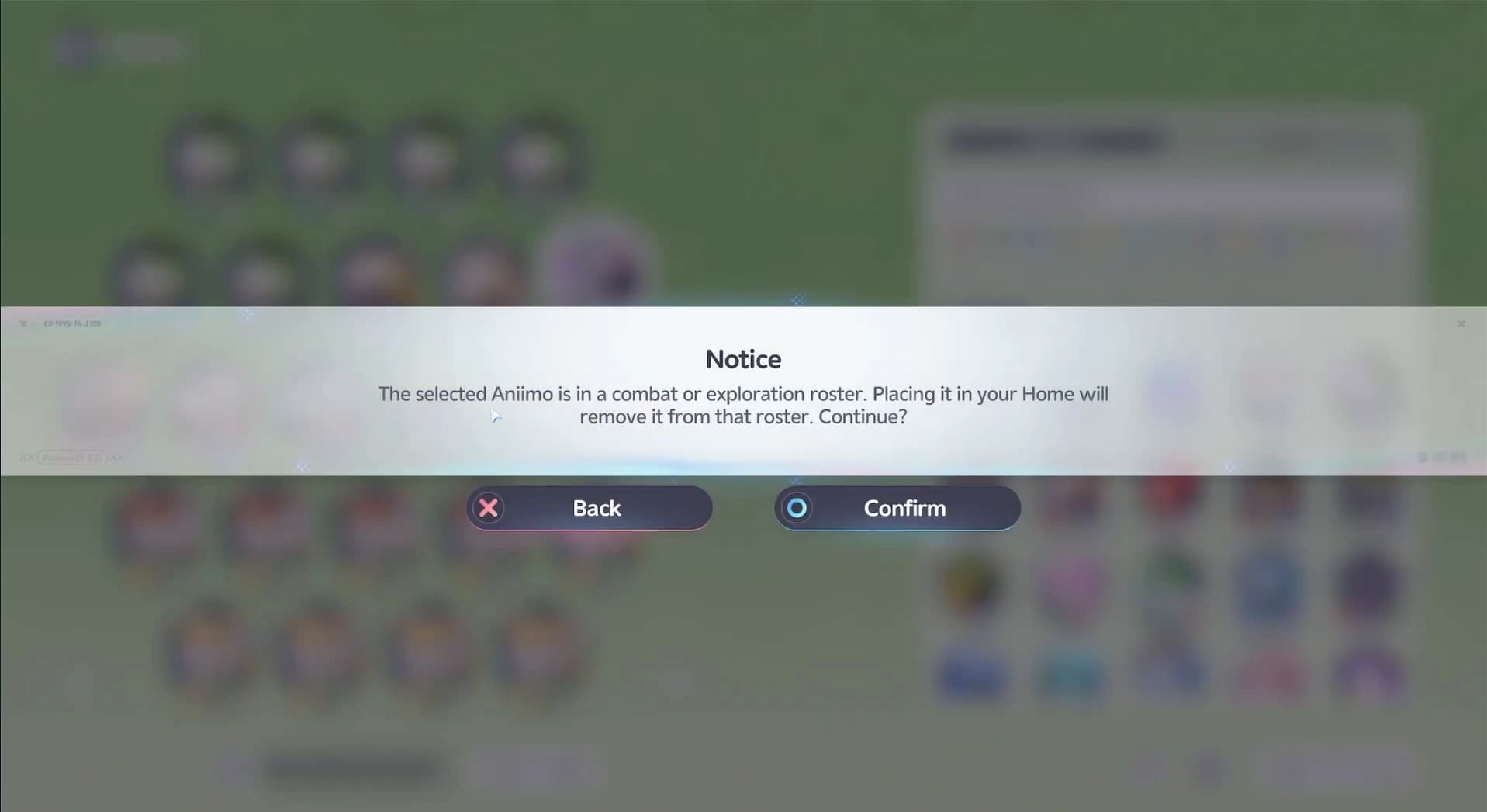
Assigning an Aniimo to Home removes it from its combat or exploration roster. Replace that field slot or remove the creature from Home before taking the squad back out; the staffing guide helps build a separate worker bench.