Basic Form
- Aniimo reaches Lv. 62.
Materials needed


Alternative: 1 × Flux Crystal can replace 1 × Gust Stone.


 WindLumin stageBREAK
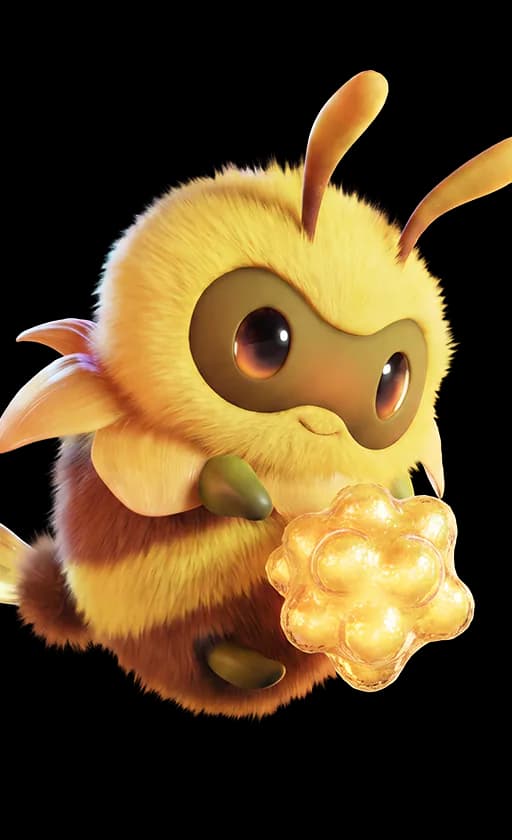
It flits busily through the night, gathering pollen from glowing plants and carefully rolling it into pretty pollen balls to bring back to the hive. When danger strikes, it swings the pollen ball like a weapon to bash its enemies.


Wind-type Aniimo specialize in controlling the wind to process products.
Enter the six white Innate values from your Aniimo. The preview starts at zero on each axis; these are inputs, not this species’ catch values.

Hitting a target with a skill generates Honeydew that only the caster can pick up. Picking it up restores 4 Energy. After picking up 4 of them, Break Damage dealt is increased by 70%. However, using skills additionally costs 10 Energy, and hits will no longer generate [Honeydew]. These effects last 8s.

Charges at the target.

Swings a Pollen Ball and smashes it into the target, dealing massive damage.

(BREAK) Wields the power of wind to attack targets at close range.

 LegendaryEpicRare
Same item in 3 quality tiers
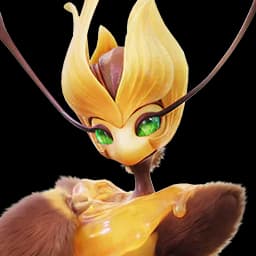
Guard the hive with a stronger body!
Alternative: 1 × Flux Crystal can replace 1 × Gust Stone.
Ascend the Honeycomb Throne with regal poise.
Alternative: 1 × Flux Crystal can replace 1 × Gust Stone.
Choose your current form to see its available transformations and materials.
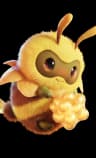 Puffby · Basic0 available transformations
Resonance Training raises Puffby’s base stats permanently. Each stage holds a short ladder of training levels paid for in materials; clearing one needs an Aniimo level and a stage material. The last stage opens at level 65.
 TrainingWhisperwake Isles Dewdrop Crystal
 Stage advancementGust Stone
 Stage advancementPhenomena Crystal
 Whisperwake Isles Dewdrop Crystal×20
 Gust Stone×2Whisperwake Isles Dewdrop Crystal×25Gust Stone×4Whisperwake Isles Dewdrop Crystal×30Gust Stone×6Whisperwake Isles Dewdrop Crystal×40Gust Stone×8Whisperwake Isles Dewdrop Crystal×50Gust Stone×10
 Phenomena Crystal×1Whisperwake Isles Dewdrop Crystal×60Gust Stone×10Phenomena Crystal×2
Explore Puffby’s habits, encounters and hidden treasures.

 +50 Research Points
Take a photo of Puffby hugging a Pollen Ball as it sleeps.
Pollen Ball
Puffby kneads collected pollen into little balls. To it, they’re both vital food reserves and a weapon in a pinch.
 +50 Research Points
Twine with Iris to get close to Puffby.
Scent Attraction
Puffby follows floral scents to find blooming flowers and collect pollen. It’s also drawn in by the similar sweet fragrance on Iris.
Research banks points for Puffby as you play. 17 milestones across 5 topics are worth 180 topic points, and field notes and appearance sightings add 250 more toward the research level.
 Sparkling Sigil ×1
 Flux Crystal ×3
 300 × Safaris