

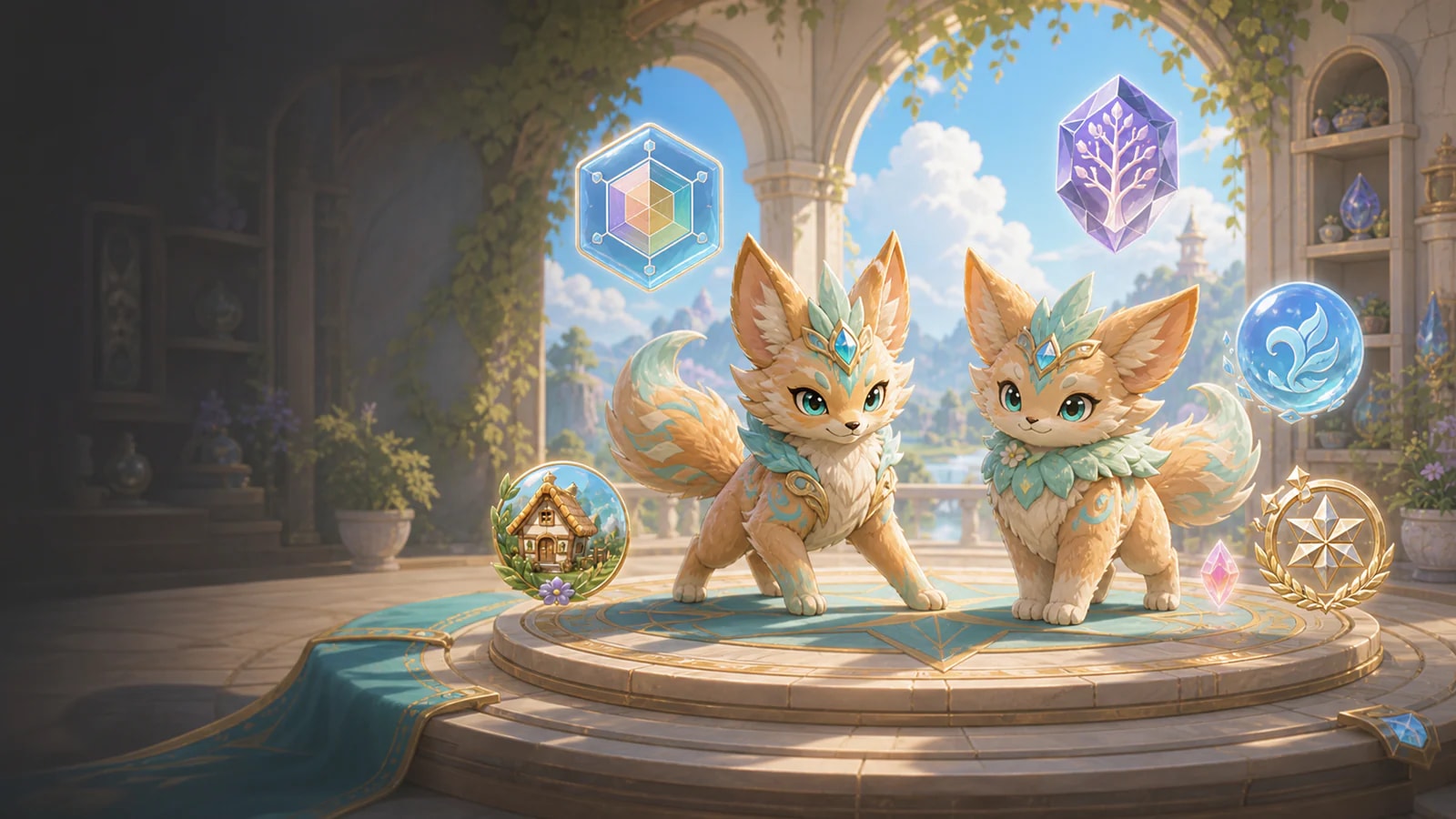
What to keep before enabling automatic release
- 1Keep identities you still need
Set aside your first usable copy of a species or exact regional form, Sparkling appearances you want, and a copy needed for an evolution or collection plan. Compare the exact form rather than only the species name.
- 2Keep useful jobs
Check Homeland assignments and traversal abilities. A low-combat-Potential worker or the only creature that opens a route can be more useful than another high-tier attacker.
- 3Keep the team’s conditions
Preserve the sex and family pairing needed by Panpanta or Piopiota, the right skill set for a support, and any copy that fills a role your stronger duplicates do not cover.
- 4Resolve investment first
Review trained copies and possible Inheritance recipients before release. Keep the current team until the replacement is ready; compare both profiles on the final Inherit screen.
- 5Release only known surplus
Start with a small box batch you have checked individually. A duplicate becomes surplus after you have a retained copy that covers its useful jobs, not merely because its color is lower.
Before using a filter, identify a small batch with automation off and inspect the results. If you cannot tell whether the filter preserves an appearance, exact form or other keeper condition, leave that batch manual. Check every intended release before confirming; keep uncertain copies out of the batch.
Five kinds of value to compare
Judge the copy in five lanes: combat, collection, training, Homeland and trading. A creature can lose one lane and still be the correct keep. A poor combat distribution may fill a production assignment; an untrained regional form may close a collection gap; a stronger new catch may be the right recipient for a trained profile even though the old copy remains useful.
| Lane | Question to answer | Evidence to read |
|---|---|---|
| Combat | Does its distribution fit the job you will actually use? | Role, six Potential values, personality, skills and a published build |
| Collection | Is the species, exact form or Sparkling status new to you? | Aniilog identity plus your own Collection |
| Training | Should this copy receive an existing trained profile? | Same-family eligibility, both profiles and the final Inherit screen |
| Homeland | Does it fill an assignment or aptitude you still need? | The exact form’s published Homeland abilities and your staffing gaps |
| Trading | Is it truly redundant after every uniqueness check? | Affinity eligibility, lock state and an explicit better-copy comparison |

Read the Potential distribution for the intended role
The appraised grade summarizes six separate stats. Each stat has an Innate Potential value set on acquisition and an Acquired Potential allocation raised later, so enter both components separately. Reading the full distribution shows whether the points land on the axes that drive the intended role.
| Intended job | First axes to inspect | What the comparison means |
|---|---|---|
| Damage | ATK, then the form’s actual damage kit | ATK concentration matters more than points stranded on an unused job |
| Break | BREAK and REGEN | Break pressure and access cadence are compared together |
| Sustain / support | REGEN, HP, P.DEF and M.DEF | Survival and action cadence matter more than a headline damage total |
Then read Personality beside the distribution. Personality effects can support the same axis or pull in a different direction. The full eight-option table and the verified per-stat caps live in the Potential and personality guide; the evaluator reuses the same calculator limits instead of creating a second Potential model.
Check identity, skills and secondary work
- 1Check the species
Review Research, evolution and current team slots for this species. Each stage of an evolution line can carry its own collection or progression use.
- 2Check the exact form
Basic, regional, weather and Prismana forms have form-aware Aniilog routes. A new species and a new form of an owned species are different collection gains.
- 3Check Sparkling separately
Sparkling can coexist with eligible forms and any Potential grade. Record whether it is your first Sparkling copy without adding combat points for the visual trait.
- 4Read the acquired skill by name
Write down the exact in-game skill and compare it with the copies you intend to keep. Match that skill to a real build plan before assigning transfer value.
- 5Check evolution and Homeland assignments
An apparently redundant combat copy may still be the material for a missing evolution entry or the only creature filling a production role in your Home.
The Inherit system moves a trained profile between Aniimo in the same family: EXP, level, Resonance stage, Star rank, Capability Awakening and other training progress travel together, even though Awakening can be reset below Lv. 60. Both creature identities remain in the Collection. Use Inherit when the new identity or distribution is the better home for that profile.
For work value, compare the selected form’s named aptitudes with the open jobs in the Homeland staffing guide. For exchange value, use the trading guide to review Affinity eligibility, daily attempts, lock state and the exact creature on both sides.
Use Aniilog to identify the exact form, then compare regional and weather forms, the evolution line and any published build guide. That sequence gives collection identity, legal progression and practical team fit their own place in the decision.
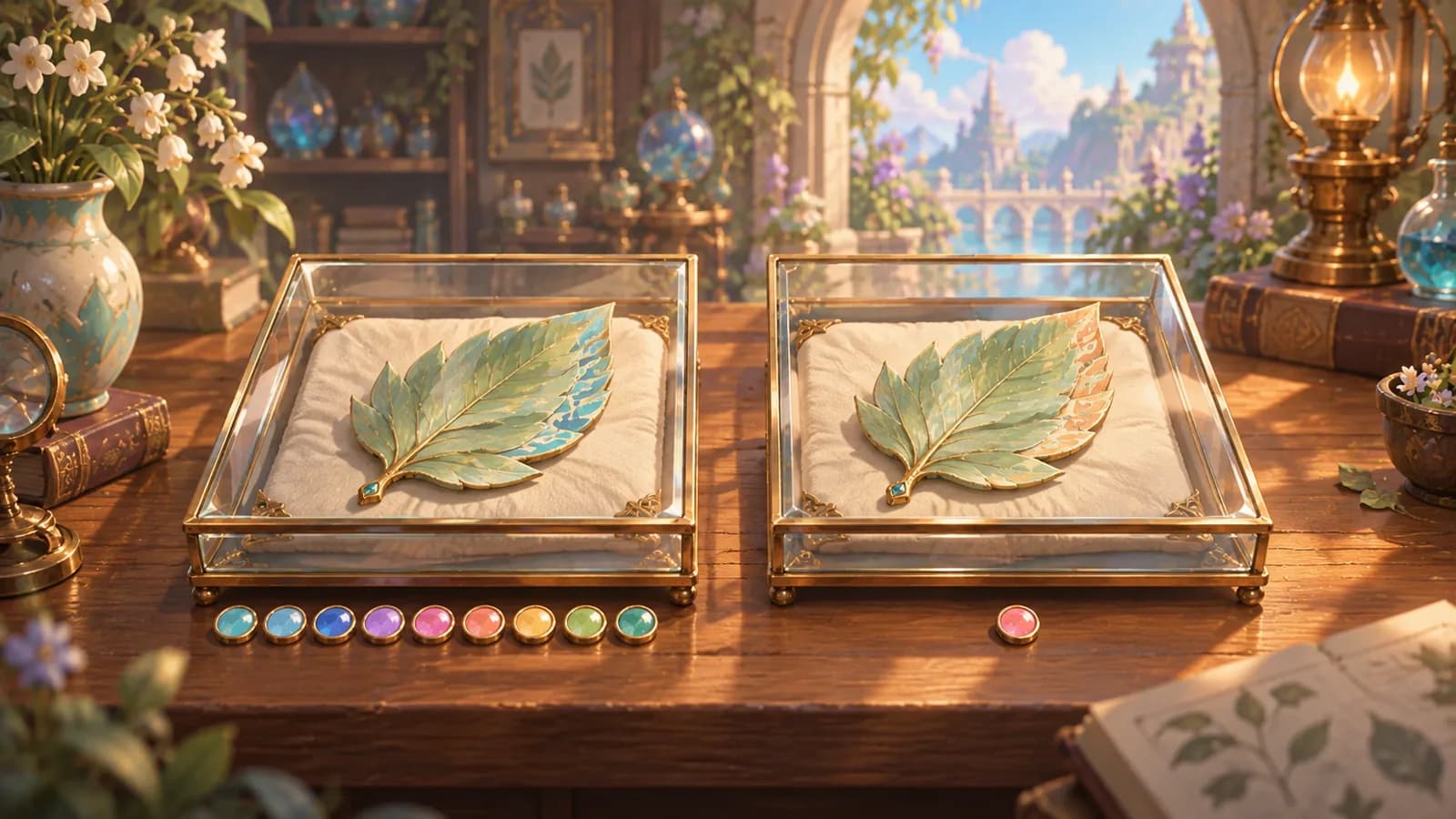
Make the keep, trade or release decision
Choose trade or release when the comparison shows a clearly better same-role copy and the original has finished its collection, skill, evolution, Homeland and training jobs. The table turns that decision into a quick final scan.
Catches to clear
- Better copy
- Ready when a clearly better existing copy exists for the same intended role.
- Species
- Ready when current Research, evolution and team objectives are already supplied.
- Exact form
- Ready when the same Basic, regional, weather or Prismana form is already covered.
- Sparkling
- Ready when the appearance and collection goal is already covered.
- Acquired skill
- Ready when the named skill already has a clear home in another kept copy.
- Evolution
- Ready when evolution and Research targets are already supplied.
- Homeland
- Ready when the relevant staffing assignment is already filled.
- Potential
- Ready when both distributions are valid and appraised.
- In-game state
- Ready when the selected creature is free of team, exploration and Home assignments.
Keep, trade or release
Run the Aniimo keep-or-release evaluator to order the comparison from identity and Potential through role fit, investment and secondary value. The result gives you a keep, compare, inherit or trade-and-release path with the strongest reason first.
Frequently asked
Does a Perfect Potential grade always mean I should replace my current Aniimo?
Compare the six-stat distribution against the intended role, then include personality, exact form, skills and existing training. A lower total can fit the job better when its points land on the role’s most useful axes.
How do Sparkling and Prismana affect the evaluation?
Sparkling adds appearance and collection value. Prismana adds an exact form with its own elements, skills and role-facing record. Score those traits in the collection and form lanes, then read combat value from Potential, skills and build fit.
Does Inherit consume the old Aniimo?
The Inherit screen swaps trained profiles between same-family Aniimo, and both identities remain in the Collection.
When is an Aniimo a trade or release candidate?
It becomes a candidate when you already own a clearly better same-role copy and the original has finished its collection, skill, evolution, Homeland and training jobs.