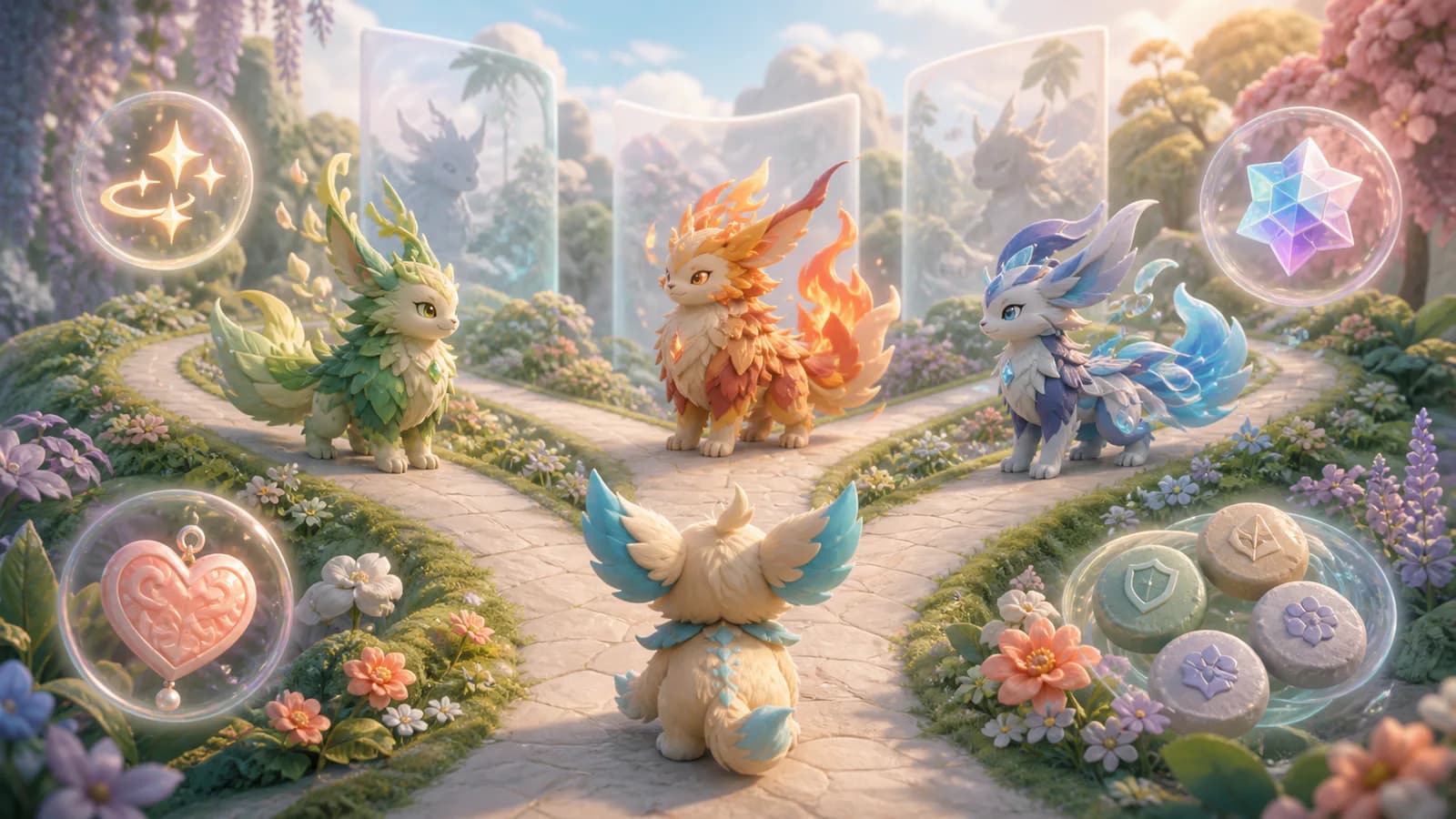
All three games open with the same promise: find a creature, catch it, build a team around it. The hour after that is where they separate. Aniimo is a free, always online action RPG in which you sync with a creature you caught and fight the battle as that creature, on a live service calendar with a season pass and a store. Palworld is a one-time $29.99 survival crafting game with hunger, guns and base automation, which you can host on your own dedicated server and play alone with no connection at all. Pokemon Scarlet and Violet are $59.99 single-player RPGs on Nintendo hardware, turn-based, finishable on a flight, and carrying by far the deepest competitive scene of the three. Of the three, Aniimo sits closest to open-world action exploration and furthest from survival crafting, which is why players arriving from Palworld expecting to chop trees are the ones who bounce hardest.
Aniimo vs Palworld vs Pokemon, side by side
Twelve things that decide whether you enjoy one of these games. The Pokemon column describes the current mainline pair, Scarlet and Violet, because that is the shape most people mean by "Pokemon", with Legends: Z-A noted where it breaks the pattern.
| What you care about | Aniimo | Palworld | Pokemon |
|---|---|---|---|
| Combat | Real-time action. Command mode lets the Aniimo fight while you direct it, Twine mode puts you inside the creature driving its moves yourself | Real-time third-person action with firearms, thrown spheres and Pals fighting alongside you | Turn-based, one move per side per turn. Legends: Z-A is the exception and runs real-time |
| Catching | Throw an Aniipod at a weakened target. Nine functional pod models, from routine throws to guaranteed captures | Throw a Pal Sphere at a weakened Pal, with better spheres for tougher targets | Throw a Poke Ball at a weakened Pokemon, with better balls and status effects raising the odds |
| Creature count | 86 Aniilog entries covering 206 forms at launch | 287 Pals after the 1.0 update | Over 1,000 species across the whole series; a single mainline game ships a regional dex, 400 in Paldea |
| Variants | 18 alternate form types. 57 species change with region, weather, time of day or rarity, and many change element with them | Elemental subspecies, Alpha and boss variants, plus Lucky Pals | Regional forms, Paradox forms, Megas, and shiny colour variants |
| What you do with them | Fight as them, borrow their Mobility trait to traverse, staff your Homeland with them, raise Potential and Personality, trade them to friends | Assign them to base tasks like mining, crafting, planting and cooking, ride them, breed them, or condense duplicates into a stronger one | Level them, evolve them, teach moves, breed for stats, and battle other trainers |
| Base building | Homeland: an instanced plot with an RV at its centre, 20 RV levels, 23 growables and 13 worker abilities. Placement is on a grid, not free-form | Free-form survival building anywhere in the world, with a full crafting tree, power generation and Pal-run production lines | None in the mainline games |
| Multiplayer | Party co-op with crossplay across PC, PS5, Xbox and mobile, same service region only. Holo-Battle Interlink is a four-player squad, Egg Heist teams take three, three Sanctums need two | Four players in online co-op, or up to 32 on a dedicated server you can host yourself | Four players in the Union Circle overworld, plus trading and battles |
| PvP | A listed Steam feature. A direct arena battle plus the Egg Heist seasonal ladder, which is player versus environment versus player. No ranked 1v1 or 3v3 queue is announced | Arena battles against other players, alongside the main co-op survival game | Ranked Battles, official seasons and a world championship circuit |
| Endgame | Sanctum clears, world bosses, Egg Heist ranks, Potential and Capability Awakening on a small number of finished builds, and a rotating event calendar | Raid bosses, tower bosses, base optimisation and breeding for passive skills | Competitive ladder, shiny hunting and living-dex completion |
| Money | Free to download. A $4.99 Monthly Pass, a $9.99 or $19.99 season pass, cosmetics and Lumin Crystals from $0.99 to $99.99 | $29.99 once. No in-game store | $59.99 once, plus paid expansions. Online play needs a Nintendo Switch Online membership |
| Platforms | PC through Steam, Epic and the official launcher, PS5 and Xbox; iOS and Android arrive September 23. Progress follows the account across devices in the same region | Windows, Xbox One, Xbox Series, PS5 and macOS. No Nintendo platform | Nintendo Switch and Switch 2 only |
| Solo and offline | Solo is the default shape, but a broadband connection is required on every platform and there is no offline mode | Full single-player, playable offline | Full single-player, base game playable with no connection |


- Aniimo entries at launch
- 86
- Forms at launch
- 206
- Elements
- 9
- Damage multipliers
- 1.6x, 1x, 0.625x
The element chart is the clearest single difference in how the three games do maths. Pokemon has 18 regular types, multipliers of 2x, 0.5x and zero, and dual typing that stacks those into 4x and 0.25x. Aniimo has nine elements, three multipliers, and nothing that reads zero: 19 of the 81 matchups are super effective at 1.6x, 27 are resisted at 0.625x, and the remaining 35 are flat. Every attack lands. The full grid, including which forms carry a second element, sits on the Aniimo type chart.
What Aniimo does that neither of the others does
You become the Aniimo
Twining is the mechanic the marketing leads with, and it is the one that has no Palworld or Pokemon equivalent. You do not ride your creature and you do not order it around from outside. You sync with one of your own party Aniimo and control it directly: its moves, its weight, its reach.

Fights run in one of two modes. Command leaves the Aniimo fighting on its own while you direct it, which is the closest thing to a Pokemon battle Aniimo has. Twine hands you the controls. The same sync governs traversal: there are no mounts, no glider and no hoverboard in the game, because movement is a creature you own rather than an item you unlock. Eight Mobility traits cover sprinting, burrowing under walls, flight, a mid-air dash, cloud walking and lighting dark terrain, and the trait travels with the creature, so your movement kit is a roster decision. The Twining guide has the full trait table.
Forms change with the region, the sky and the clock
Palworld also has elemental subspecies, alongside its Alpha and Lucky variants. Pokemon has regional forms, but they are authored one at a time and tied to a fixed region. Aniimo builds the idea into the catching loop: 57 of its species have more than one form across 18 alternate form types, and catching the same species somewhere else, or in different weather, or after dark, often gives you a different element pairing on the same creature.





Turbo is Wind on its own. Its Plateau Form is Wind and Ice, its Rainstorm Form is Wind and Lightning, and its Prismana Form is Dark and Wind. Flutternym runs the same spread across map and clock: Wind as standard, Wind and Grass in the Sea of Flowers, Wind and Earth in the Mountain Woods, and Dark and Wind after dark. That turns a spawn table into a build decision, and it is why the regional forms guide and the weather guide exist as separate references.


Egg Heist puts an extraction mode inside a creature collector
Neither of the other two games has anything like Operation: Egg Heist. A team of one to three Pathfinders lands on the Lost Isles, loots toward the Lost Sanctum, and has 30 minutes to carry an egg back to an Egg Boat. Faint once and you forfeit your backpack and everything equipped in it. It runs its own gear, its own shop, 28 talents and a seasonal ladder that only moves when you evacuate alive.
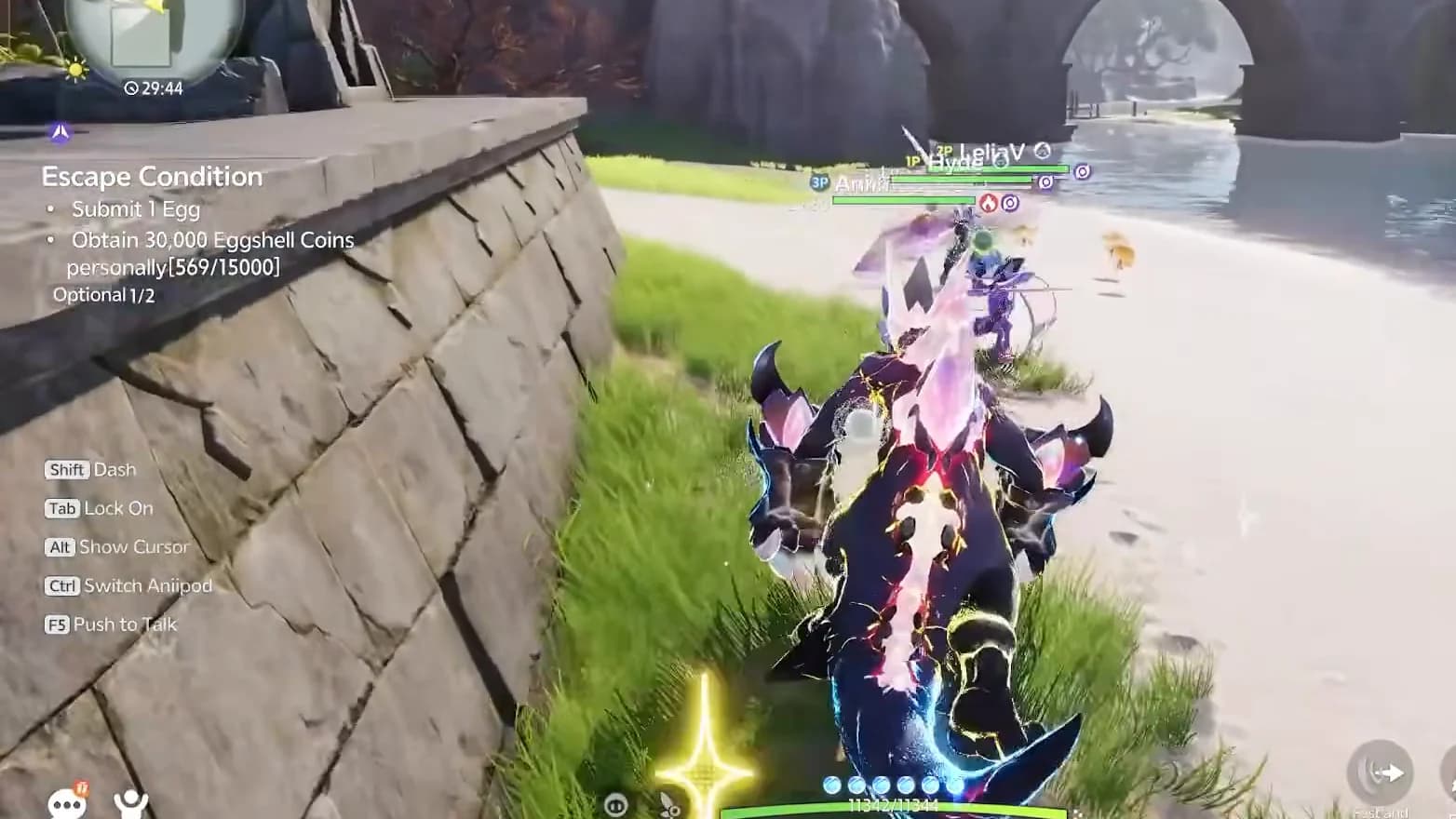
Above that sits a six-team Operation layer: six full teams on one island chasing a single prize egg. The Egg Heist guide covers routing, loadouts and talent order. Palworld's closest equivalent is a raid boss, and Pokemon has no comparable mode at all.
Where Aniimo is weaker today
Aniimo launched to a Metascore of 78 and a Steam user rating of Mixed, with 68 percent of 4,558 reviews positive. Both numbers are honest about the game. Four complaints repeat across critic reviews, Steam threads and community boards in every language.
The interface is the near-universal criticism. Critic reviews converge on it independently: cluttered menus, unintuitive structure, and reward claiming buried several layers deep. Console players have it worse than PC players, and a recurring complaint is the lack of a single button that collects everything at once. Onboarding is heavy for the same reason, with a wall of simultaneous events landing on a brand-new account.
The store is loud. The two most upvoted negative Steam reviews both attack the monetisation, one calling the game a gacha and citing the volume of passes, stores and objectives pushed at the player. The most upvoted positive review says the opposite: no paywall, everything obtainable through normal play. Both are describing the same store, and the difference is tolerance for being sold to. Our pay-to-win breakdown and gacha analysis work through the individual purchases.
Launch week had real technical faults. Aniimo published an advisory naming 19 Intel 13th and 14th generation desktop processors that crash during play, with a BIOS microcode fix. Alongside that: stuttering that survives a settings change, a launcher failure that stops the game starting, tutorial steps that do not spawn the creature you need, and matchmaking timeouts. Fixes and workarounds live in the error codes guide.
Co-op progression is thinner than the feature list suggests. Story steps, waypoint activation and several world-state rewards belong to the host, so a guest generally repeats those objectives later in their own world. Chest loot is shared, quest completion is not. Palworld's shared dedicated server, where everybody's progress accrues in one persistent world, is a genuinely better co-op model. The multiplayer guide explains how to work around it.
If you loved this in Palworld, here is the Aniimo version
| What you loved in Palworld | The Aniimo equivalent |
|---|---|
| Pals working your base while you are away | Worker Aniimo staffing the Homeland, with 13 work abilities across 23 growables. See the Homeland guide |
| Free-form building anywhere in the world | An instanced plot with an RV at its centre and 20 RV levels of expansion. Furniture and facilities are placed on a grid |
| Catching a boss Pal after a long fight | Alpha and Omega world bosses, fought in your own world and priced in Primegy per attempt. See world bosses |
| Breeding for passive skills | Breeding two same-family parents for up to four innate Potentials and one trait, plus the separate Nurture loop |
| Hunting rare Pals across biomes | Regional, weather and Nighttime forms, plus Sparkling, Prismana and Umbral rarities. Start at rare variants |
| Running your own dedicated server | Nothing. Aniimo is publisher-hosted on three service regions, with no self-hosting and no private server |

The last row is the one Palworld players ask about most, and it is worth being blunt: there is no self-hosting path, no LAN mode and no offline mode. Your character lives in one of three service regions, America, Europe or APAC, and no transfer moves it between them. Friends in a different region cannot party with you at all, even though crossplay across PC, PS5, Xbox and mobile works inside a region. The accounts and servers guide covers picking correctly the first time.
If you loved this in Pokemon, here is the Aniimo version
| What you loved in Pokemon | The Aniimo equivalent |
|---|---|
| Weakening a wild encounter and throwing a ball | The same loop, with nine Aniipod models and a displayed catch chance you can raise before you throw |
| Reading the type chart in your head | Nine elements at 1.6x, 1x and 0.625x, with no immunities. The full grid is on the type chart |
| Filling the Pokedex | The Aniilog, 86 entries and 206 forms at launch, browsable in our Aniilog database |
| IV and nature breeding | Potential, four quality grades over a per-stat value, plus eight Personality traits worth up to 10 percent on one stat. See Potential |
| Shiny hunting | Sparkling Aniimo, with their own catch items and rates. See shiny hunting |
| Trading with friends | Friends-only exchanges gated behind Affinity level, with a 30-day lock on a traded Aniimo. See trading |
| Gym badges and a story to finish | A main quest through Idyll, 17 Sanctum puzzle rooms and the Elite Training ladder. See the story walkthrough |

Two Pokemon habits do not transfer. Your active roster is four Aniimo rather than six, so the sixth-slot filler you always carried has nowhere to go. And a role sits on top of the element: every Aniimo is a DPS, BREAK, Support, Heal or REGEN unit, and a team that ignores BREAK will spend whole fights unable to open the stagger window that makes damage worth spending. The combat guide walks through the sequence.
Who should skip Aniimo
The connection requirement is the one that turns the most people away, and no amount of solo content answers it. Aniimo needs broadband on every platform, including mobile. If you were planning to install it for a flight or a commute through dead zones, stop here and read solo and offline play before you spend the download.
If instead you want an open world to wander, creatures to catch and train, and combat you play with your hands, the entry price is zero and the download is the only commitment.
How much Aniimo costs to play properly
Nothing is the honest answer for the first month. The game is free on every platform, and the free route reaches the same direct Potential ceiling as a paid one. What money buys is pace, certainty and cosmetics.
- Base game
- Free
- Monthly Pass
- $4.99 for 30 days
- Advanced season pass
- $9.99
- Collector's season pass
- $19.99
| Purchase | Price | What it does |
|---|---|---|
| Companion Handbook, Standard | Free | The base season track. Progress comes from ordinary play |
| Companion Handbook, Advanced | $9.99 | Premium reward track for the season, 680 Lumin Crystals in-store |
| Companion Handbook, Collector's | $19.99 | The larger premium track, 1,280 Lumin Crystals in-store. Upgrading from Advanced costs $10 |
| Monthly Pass | $4.99 | An instant bonus, then a daily reward for 30 days, and reduced egg hatch time. Stacks to 180 days |
| Lumin Crystals | $0.99 to $99.99 | Six tiers, 60 crystals at the bottom and 6,480 at the top, with a bonus the first time you buy each tier |
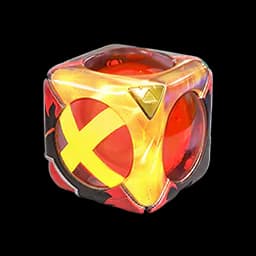
The purchase people argue about is the Sparkling Cube, which guarantees the catch, a Sparkling result and Perfect Potential. It lists at 1,500 Lumin Crystals, and no pack sells exactly that number, so the practical cost is one $29.99 top-up, which buys 1,980. An Aniipod Ultra is 200 crystals, or 200 Glimmer, and Glimmer is earned in play.

- 1Spend nothing for the first week
Clear the opening region before you judge the store. Launch events hand out a lot of what the shop sells.
- 2Buy the season pass only after you have earned the levels
A season track is easy to value once you can see which premium rewards would unlock immediately.
- 3Treat the Monthly Pass as the cheapest recurring option
At $4.99 for 30 days it is the smallest commitment in the store, and hatch-time reduction is the effect you feel daily.
- 4Keep catch guarantees for targets you cannot repeat
A Sparkling Cube only earns its price when that exact Sparkling result matters. Free exchanges exist and are slower, not worse.
- 5Ignore routine resource packs
Anything ordinary play replaces within a session is the weakest purchase in the store.
A realistic ceiling for an account that wants the season track without chasing guarantees is $14.98 a month, the Advanced pass plus the Monthly Pass. Two months of that costs about what Palworld costs once, and unlike Palworld it keeps costing. That is the honest way to weigh "free" against "paid" here: Aniimo is cheaper to start and more expensive to keep up with.
Questions people actually ask
Is Aniimo like Palworld?
Only at the surface. Both are open-world creature collectors with real-time combat, base building and co-op, and both are third-person. Under that, Palworld is a survival crafting game with hunger, a tech tree, free-form building, guns and self-hosted servers. Aniimo has none of those. It is a live-service action RPG whose base is an instanced plot, whose combat is a party of four Aniimo with roles and elements, and whose servers are run by the publisher.
Is Aniimo a Pokemon clone?
It takes the catching loop and an element chart from Pokemon and nothing else. The battles are real-time rather than turn-based, the player controls the creature directly through Twining, the dex is a research system rather than a checklist, progression runs through Potential, Personality, Resonance and Capability Awakening, and the whole thing is free with a store. Critic reviews more often reach for Pokemon Legends: Arceus than for the mainline games, which is the fairer comparison.
Is Aniimo better than Palworld?
They are not competing for the same evening. Aniimo is better if you want directed exploration, a large roster with form variants, puzzle Sanctums and combat you play as the creature. Palworld is better if you want to build, automate and own your world, play offline, or run a persistent server for a group. Palworld also wins on co-op progression, because everyone on a server keeps what they do. Aniimo wins on creature variety per species and on cost of entry.
Is Aniimo worth playing?
It is free, so the only cost of finding out is the download and a broadband connection. The world, the creature designs and Twining draw praise almost everywhere, including from reviewers who dislike the rest. The menus are genuinely bad, the store is loud, and launch week brought crashes on some Intel processors. If those are tolerable, the first ten hours are the strongest argument the game has.
Is Aniimo pay to win?
No paid tier reaches a higher power ceiling than a free one, and the same direct Potential cap is available without spending. What money buys is speed and certainty: guaranteed catches, extra reward claims and a premium season track. Whether that is fairly priced is a separate question, and the full accounting of every paid option against its free route is in Is Aniimo pay-to-win?.